Aerosol Dry Conditioner: Silicone Deposition & Detangling
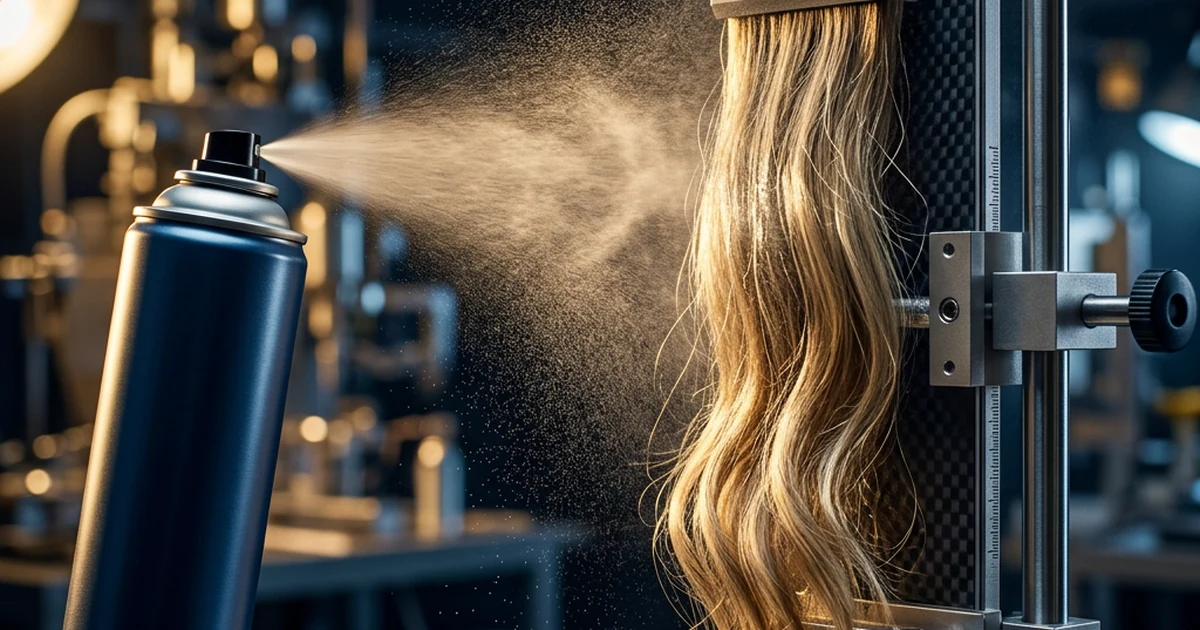
An aerosol dry conditioner is a pressurised hair-care spray that deposits a thin silicone film onto dry or damp hair without rinsing, cutting friction between strands so hair detangles and feels smooth. It works by suspending volatile and non-volatile silicones in a fast-evaporating carrier, then using propellant pressure to atomise the mixture into a fine, even mist. This matters for formulators because the aerosol format, the carrier system, and the silicone blend all have to work together, or the product either fails to detangle or leaves hair feeling heavy. The same chemistry underpins leave-in hair serum sprays, which use a similar silicone-in-carrier system aimed more at shine and frizz control than raw detangling force.
How Aerosol Dry Conditioner Sprays Deposit Silicone
An aerosol dry conditioner works by dissolving or dispersing one or more silicone polymers in a volatile carrier, then expelling the mixture through the valve as a fine mist. As the carrier flashes off in the seconds after spraying, the silicone is left behind as a continuous, low-friction film coating the hair shaft. The propellant supplies the atomisation energy, while the carrier controls how evenly the film spreads before it sets. This three-part system is a direct application of the same aerosol chemistry fundamentals covered in our Aerosol Chemistry 101 guide, and it sits within the wider Personal Care & Cosmetic Aerosols category that also covers deodorants, body sprays, and styling products.
- Active silicone blend: One or more silicones chosen for volatility, film character, and substantivity to the hair fibre
- Volatile carrier: Evaporates within seconds of spraying, leaving the silicone film behind without wetting the hair
- Propellant: Supplies atomisation energy and sets droplet size, spray pattern, and mist fineness
- Cationic deposition aid: Optional functionalised silicone or quaternary compound that targets deposition to damaged, negatively charged hair sites
Because the film never rinses off, every component in the formula has to be compatible with leave-on use at the concentrations the hair will actually carry, which is a stricter constraint than a rinse-out product gets from a brief few minutes of shower contact.
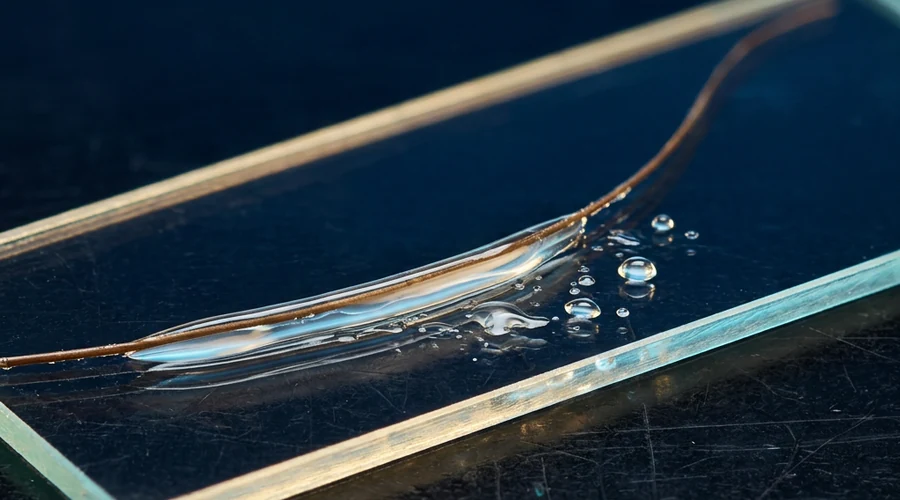
Silicone deposition on a single hair strand under laboratory conditions, showing the glossy film left behind once the volatile carrier has evaporated.
Volatile vs Non-Volatile Silicone Types for Hair
Choosing the right silicone type is the central formulation decision in an aerosol dry conditioner, because volatility and film character trade off directly against each other. Volatile cyclic silicones, most commonly cyclopentasiloxane (D5), evaporate from the hair within minutes and leave only a very light conditioning effect, which makes them useful as a spreading aid rather than a long-wear film former. Non-volatile linear silicones such as dimethicone stay on the hair indefinitely, building a durable, higher-gloss film that persists through brushing and styling. Silicones in general are built on a silicon-oxygen backbone that gives them the flexibility and low surface energy behind this lubricating behaviour.
| Silicone Type | INCI Name | Volatility | Typical Role |
|---|---|---|---|
| Volatile cyclic | Cyclopentasiloxane (D5) | High — evaporates within minutes | Carrier and spreading aid; light, non-greasy sensory finish |
| Non-volatile linear | Dimethicone | None — remains on the hair | Durable, glossy, lubricious long-wear film |
| Cationic functionalised | Amodimethicone | Low | Selectively deposited, high-substantivity film for targeted detangling |
Formulators rarely rely on a single silicone. A typical dry conditioner blends a volatile carrier silicone for spreadability with a non-volatile or cationic silicone for lasting conditioning, balancing immediate sensory feel against long-wear performance. The same PDMS chemistry appears in non-hair-care contexts too, and the contamination risks that silicone leaves on painted or bonded surfaces — covered in our guide to aerosol silicone spray — are the same low-surface-tension, non-drying film behaviour that makes silicone such an effective hair conditioner in the first place.
The Detangling Mechanism: Lubricity & Cationic Deposition
Detangling benefit comes from reducing the friction between individual hair fibres, which is what actually resists a comb or brush passing through tangled hair. A silicone film lowers the coefficient of friction at the fibre surface, letting strands slide past each other instead of catching on raised or damaged cuticle scales. The effect is strongest on chemically treated or heat-damaged hair, where the cuticle is roughened and friction is highest to begin with.
Amodimethicone carries amine functional groups along its backbone that pick up a positive charge in the formulation, giving it a strong affinity for the negatively charged, damage-exposed sites on the hair cuticle. This selective, cationic deposition is more efficient than a plain dimethicone, which deposits uniformly regardless of where the hair actually needs conditioning. Research on hair-fibre surface chemistry and silicone substantivity is documented in the peer-reviewed literature indexed on PubMed, and the same substantivity principle is used in rinse-out conditioners and in the styling polymers covered in our hair mousse aerosol technology guide.
Formulating for Aerosol Delivery
Translating a silicone conditioning blend into a working aerosol product means getting the carrier, propellant, and actuator to cooperate, not just getting the silicone chemistry right in isolation. The carrier solvent has to dissolve or finely disperse the silicone blend and remain miscible with the chosen propellant, since a formulation that separates in the can will spray unevenly from the first actuation to the last. Liquefied hydrocarbon propellants are common because they mix readily with the same carriers that dissolve silicone, a trade-off explored across propellant families in our aerosol propellants explained guide.
Actuator design is just as important as the chemistry. A fine, low-output mist spreads a light, even silicone film across the hair, while a coarse spray pattern or an overly viscous carrier deposits the silicone unevenly in heavier patches, producing the greasy, weighed-down feel that consumers associate with product buildup. This is the same mechanical-breakup nozzle engineering used across personal care aerosols, including the powder-suspension systems in our dry shampoo aerosol formulation guide, even though a dry shampoo disperses a solid powder rather than a dissolved silicone.

Side-by-side comparison of a silicone-treated hair tress against an untreated control, the standard visual check behind instrumented combing-force testing.
Performance Testing: Combing Force & Gloss
Formulators verify detangling performance with instrumented combing force testing rather than relying on subjective feel alone. A comb is drawn through a standardised hair tress at a controlled speed while a force gauge records the peak and average resistance, and the treated tress is compared against an untreated control cut from the same source hair. A validated formulation produces a measurable, repeatable reduction in combing force on both wet and dry hair, not just an immediate-use sensory improvement that fades after a few brush strokes.
Gloss is measured separately with a goniophotometer, which quantifies how much light reflects off the hair surface at a fixed angle — a smoother, more uniform silicone film reflects light more specularly and scores higher. Silicone deposition itself can be quantified gravimetrically or by extracting and analysing the film left on a treated tress, giving formulators a direct read on how much of the applied silicone actually stayed on the hair versus how much was lost to overspray or evaporation of the carrier.
Regulatory, Stability & VOC Considerations
An aerosol dry conditioner is regulated as a cosmetic rather than a drug in most markets, which places the compliance burden on accurate ingredient labelling and substantiated claims rather than premarket drug approval. In the United States, labelling and safety expectations for leave-on hair products are set out by the FDA, while Volatile Organic Compound content from the carrier and propellant is subject to the same regional consumer-product VOC limits that apply across the wider cosmetics and personal care aerosol manufacturing category.
Cyclic volatile silicones carry their own regulatory attention: octamethylcyclotetrasiloxane (D4) and decamethylcyclopentasiloxane (D5) are identified as persistent, bioaccumulative substances under EU REACH, which restricts their use above defined concentration thresholds in cosmetic products sold in the European market. Formulators selling into the EU substitute D5 with alternative volatile carriers and recheck the current ECHA position before finalising a recipe, the same compliance step already required for other silicone-based personal care aerosols such as personal care deodorant and body sprays. Stability testing stores the finished product at elevated temperature to confirm the silicone stays dissolved or stably dispersed and that the cationic deposition aid does not interact unfavourably with other charged ingredients in the formula over shelf life.
Frequently Asked Questions
What is an aerosol dry conditioner and how is it different from a rinse-out conditioner?
What is the difference between dimethicone and cyclomethicone in a hair spray?
Why is amodimethicone used instead of plain dimethicone for detangling?
How do formulators measure whether a hair serum spray actually reduces detangling force?
Why are cyclic siloxanes like D4 and D5 restricted in some markets?
Can aerosol dry conditioner sprays cause product buildup on hair?
Need Expert Aerosol Consulting?
Our team provides end-to-end aerosol technical consultancy — from formulation development and propellant selection to filling line setup, regulatory compliance, and market launch strategy.
Get a Free Consultation