Dimethyl Ether Aerosol Propellant Technical Guide
Guide Contents
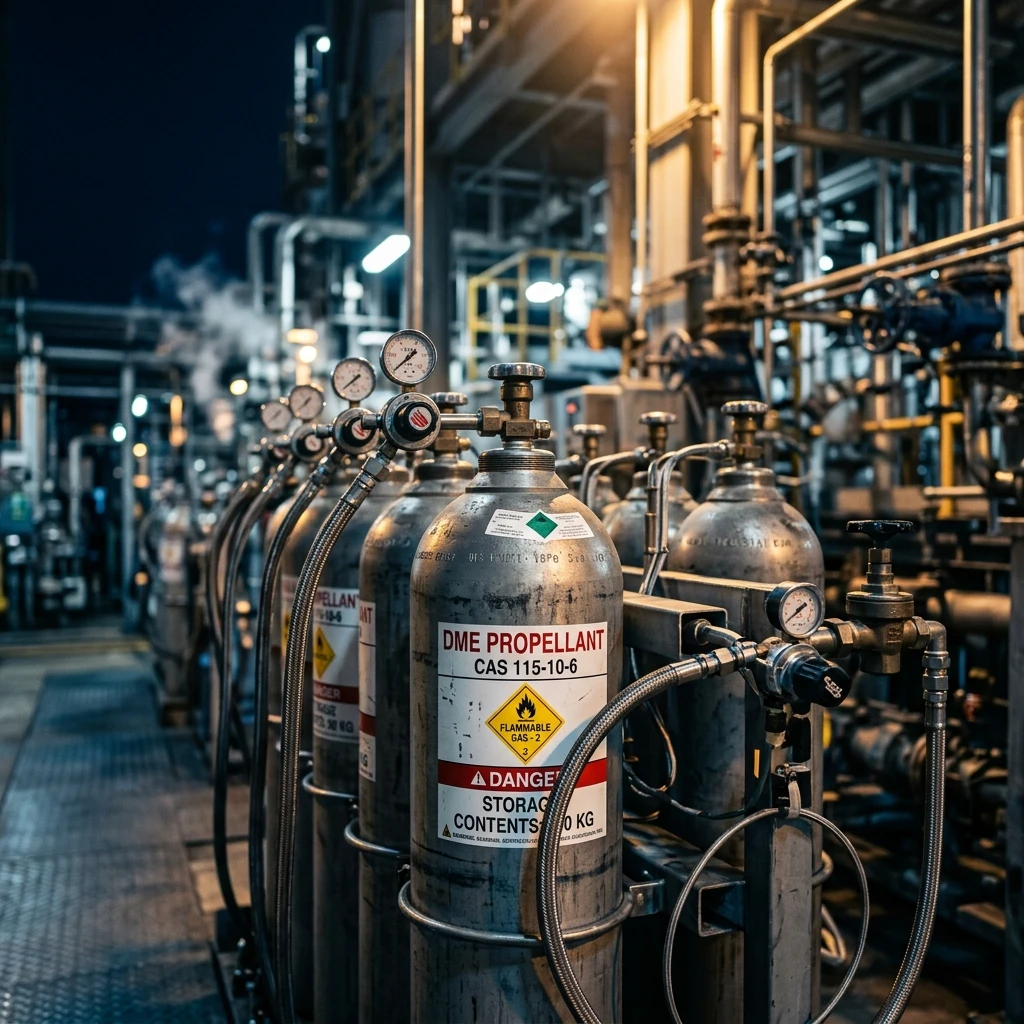
Dimethyl ether aerosol propellant is a versatile, water-miscible liquefied gas propellant utilized across personal care, household, and industrial spray formulations. It works by expanding from a liquid state under pressure to maintain constant dispensing force while dissolving polar concentrates. This matters for aerosol manufacturers because it offers high solvency and low Global Warming Potential, enabling VOC reduction and reducing dependency on hydrocarbons. To understand how propellants behave in complete packaging systems, refer to our comprehensive guide on how aerosol cans work.
As regulatory frameworks globally place tighter limits on Volatile Organic Compounds (VOCs) and greenhouse gases, the aerosol industry has faced pressure to phase out traditional fluorocarbons and optimize volatile organic systems. Traditional liquefied hydrocarbon propellants, such as butane, isobutane, and propane mixtures, are highly effective hydrophobic solvents but fail to mix with polar concentrates. Dimethyl ether (DME), represented by the chemical formula CH₃OCH₃, bridges this gap. By offering a unique combination of dual-phase miscibility, strong organic solvency, and an excellent environmental profile, DME has established itself as an indispensable chemical tool for modern aerosol product development.
Physical and Chemical Properties of Dimethyl Ether
Dimethyl ether is the simplest ether compound, consisting of two methyl groups bonded to a central oxygen atom. At standard temperature and pressure, DME is a colorless, sweet-smelling, non-toxic gas. However, when pressurized, it easily liquefies, exhibiting a vapor pressure of approximately 5.1 bar (510 kPa) at 20°C. This pressure profile is ideal for aerosol packaging, as it sits comfortably within the safety tolerances of standard aluminum and tinplate canisters without requiring excessive wall thickness. For exact thermodynamic calculations and vapor pressure curves, consult the NIST WebBook.
Unlike standard hydrocarbons, the ether linkage in DME introduces a moderate dipole moment (1.30 D). This molecular polarity gives DME its distinctive ability to dissolve in both polar and non-polar liquid phases. The physical properties of DME must be carefully accounted for during the aerosol filling process, particularly its liquid density and boiling point. Key thermodynamic specifications are detailed below:
| Physical Property | Dimethyl Ether (DME) | Propane / Butane Blend (LPG A-70) | 1,1,1,2-Tetrafluoroethane (HFC-134a) |
|---|---|---|---|
| Chemical Formula | CH₃OCH₃ | C₃H₈ / C₄H₁₀ | CF₃CH₂F |
| Boiling Point (°C at 1 atm) | -24.8 | -42.1 to -0.5 | -26.3 |
| Vapor Pressure at 20°C (bar) | 5.1 | 4.8 | 5.7 |
| Liquid Density at 20°C (g/cm³) | 0.66 | 0.54 | 1.22 |
| Hildebrand Solvency (MPa^1/2) | 18.6 | 14.1 | 13.5 |
| Global Warming Potential (GWP) | < 1 | ~ 3 | 1430 |

Figure 1: Laboratory testing of elastomer compatibility showing volume expansion under exposure to dimethyl ether propellant.
Solvency and Aerosol Formulation Dynamics
In product development, the choice of propellant directly influences the solubility of active concentrates. When comparing DME vs LPG propellant, the most significant difference lies in their solvency power. DME has a Hildebrand solubility parameter of 18.6 MPa^1/2, placing it close to common solvents like ethyl acetate and acetone. Standard hydrocarbon propellants (LPG) are highly non-polar, with parameters around 14.0 MPa^1/2. Because of this high solvency, DME behaves not only as a pressurizing agent but also as a functional solvent. For a deeper understanding of solubility parameters and concentrate chemistry, read our guide on aerosol chemistry 101.
This solvency power is particularly valuable for hair sprays, personal deodorants, and industrial coatings. In these formulations, DME can dissolve film-forming resins, active antiperspirants, and industrial binders, eliminating the need for expensive co-solvents like absolute ethanol or methylene chloride. Furthermore, DME is unique among liquefied gas propellants due to its high water miscibility. DME can form a stable, single-phase solution with water at concentrations up to 34% by weight. This enables the design of water-based aerosol formulations that maintain fine atomization, lower raw material costs, and comply with strict environmental regulations.
Gasket and Valve Compatibility in DME Aerosols
A major engineering challenge in using DME is ensuring the chemical compatibility of the packaging components. Because of its polar ether structure, DME exhibits strong swelling effects on many common elastomers used in aerosol valve gaskets. For instance, standard ethylene propylene diene monomer (EPDM) and nitrile (NBR) rubbers absorb DME rapidly, causing them to swell, lose structural strength, and deform. This swelling can block the valve orifice, resulting in container leakage or valve failure. For a complete analysis of valve components and elastomer chemistry, see our detailed guide on the aerosol valve gasket materials.
To establish a reliable seal, valve manufacturers utilize alternative polymers. Neoprene (chloroprene) rubber, butyl rubber (IIR), or specialized fluorocarbon elastomers (Viton/FKM) are typically specified for DME systems. These elastomers restrict swelling to acceptable levels (typically under 15% volume change), maintaining sealing pressure around the valve cup and stem. Product developers must run long-term compatibility testing at elevated temperatures to verify gasket performance over the product's shelf life.
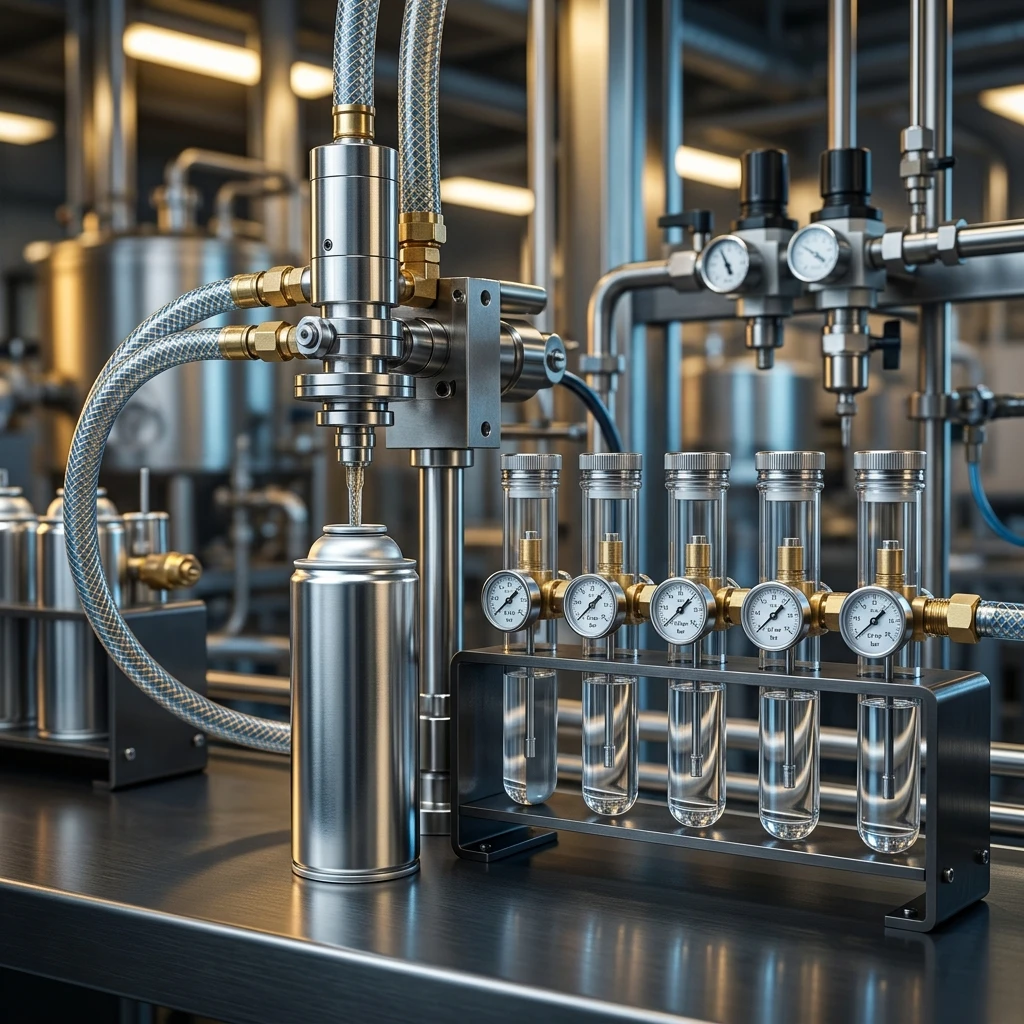
Figure 2: Quality control monitoring of filling pressures and leak standards during dimethyl ether propellant gassing.
Toxicology and Human Exposure Profile
From an occupational health perspective, the dimethyl ether toxicology profile is highly favorable. DME has low acute toxicity when inhaled, with an LC50 in rodents exceeding 164,000 ppm over 4 hours. Extensive toxicity databases, including the National Institutes of Health PubChem database, classify DME as a non-mutagenic, non-carcinogenic substance that does not accumulate in human tissue. However, like all compressed gases, high concentrations can displace oxygen, presenting an asphyxiation hazard in poorly ventilated areas.
For workplace safety, regulatory agencies have established occupational exposure limits. In both the United States and the European Union, the standard threshold limit value (TLV) is set at a time-weighted average (TWA) of 1000 ppm over an 8-hour shift. Inhalation of high levels of DME (above 50,000 ppm) can cause mild anesthesia, dizziness, or central nervous system depression. Direct contact with escaping liquefied gas also poses physical risks, such as severe cryogenic burns or frostbite to skin and eyes. Therefore, manufacturing facilities must feature robust ventilation and personal protective equipment protocols.
Flammability Hazards, Storage, and Handling Compliance
Although DME has favorable toxicology, it is classified as a GHS Category 1 Flammable Gas. It forms explosive mixtures in air within flammability limits of 3.4% to 27.0% by volume. In manufacturing environments, these limits require strict engineering controls. Filling lines must utilize Class I, Division 1, Group D explosion-proof electrical fittings, pneumatic interlocks, and continuous hydrocarbon gas detection sensors. For a comprehensive overview of safety equipment, see our guide on aerosol manufacturing plant design.
For warehouse safety, products formulated with DME must comply with local fire protection standards. Under the NFPA 30B code (Code for the Manufacture and Storage of Aerosol Products), aerosol cans filled with DME are typically classified as Level 3 aerosols. This classification requires specialized storage configurations, including fire barriers, early-suppression fast-response (ESFR) water sprinklers, and designated containment areas to mitigate the risk of high-intensity fires.
Environmental Profile: Low GWP and Sustainability Impact
The primary driver for the adoption of DME in modern aerosol formulations is its low environmental impact. DME has an ozone depletion potential of zero (ODP = 0) and a global warming potential of less than one (GWP < 1). This is a significant improvement over traditional hydrofluorocarbons like HFC-134a, which has a GWP of approximately 1430. Sustainable guidelines from the British Aerosol Manufacturers' Association (BAMA) encourage the use of DME to help manufacturers meet corporate greenhouse gas reduction goals.
Under current regulatory frameworks, DME is classified as a Volatile Organic Compound (VOC). However, because of its water miscibility, formulation chemists can replace organic solvents with water, lowering the overall VOC weight percentage of the finished product. This dual role as solvent and propellant helps manufacturers meet VOC limits set by the California Air Resources Board (CARB) and European Union directives, ensuring global compliance. For a detailed comparison of propellant environmental performance, read our analysis on propellant influence on aerosol performance.
Frequently Asked Questions
Why is dimethyl ether preferred over liquefied petroleum gas (LPG) in some aerosol formulations?
Dimethyl ether (DME) is preferred over standard LPG due to its exceptional solvency properties and high water miscibility. With a Hildebrand solubility parameter of 18.6 MPa^1/2, DME can dissolve polar active components and polymers, often eliminating the need for organic co-solvents like ethanol or acetone. Its ability to mix with water up to 34% by weight also allows for formulation of stable, water-based systems with reduced Volatile Organic Compound (VOC) emissions.
Which gasket materials are compatible with DME aerosol formulations?
DME has high polar solvency and causes extreme swelling in standard ethylene propylene diene monomer (EPDM) and nitrile (NBR) rubbers. For reliable seals, specialized butyl rubber (IIR), chloroprene (neoprene) compounds with high filler content, or high-density fluorocarbon elastomers (Viton/FKM) are required to control swelling, prevent gasket deformation, and maintain crimp seal integrity.
What is the flammability hazard profile of dimethyl ether?
DME is a highly flammable gas under GHS Category 1. It forms explosive mixtures in air within flammability limits of 3.4% to 27.0% by volume. In storage, products containing high percentages of DME are classified as Level 3 aerosols under NFPA 30B standards, requiring designated containment zones, advanced sprinkler systems, and Class I Division 1 Group D explosion-proof electrical installations.
Is dimethyl ether toxic to human health during routine exposure?
DME possesses a low acute toxicity profile. Long-term animal inhalation studies demonstrate no carcinogenic, mutagenic, or teratogenic activity, with a no-observed-adverse-effect level (NOAEL) of 20,000 ppm. However, acute exposure to massive concentrations can lead to central nervous system depression, asphyxiation, or cardiac sensitization, necessitating occupational exposure limits like the 1000 ppm 8-hour TWA standard.
How does DME impact the environment compared to fluorocarbon propellants?
DME is an environmentally friendly alternative to fluorocarbon propellants like HFC-134a. It has zero Ozone Depletion Potential (ODP = 0) and an extremely low Global Warming Potential (GWP < 1), whereas HFC-134a has a GWP of approximately 1430. DME is not restricted under the Kigali Amendment or Montreal Protocol, making it a sustainable choice for greenhouse gas reduction.
Can DME be formulated directly with water without separating?
Yes, DME is unique among liquefied gas propellants for its high water solubility. It can form a single, homogeneous liquid phase with water at concentrations up to 34% DME and 66% water by weight at room temperature and pressure. Beyond this limit, a two-phase system develops, which can be stabilized into a fine spray emulsion using appropriate non-ionic surfactants.
Need Technical Support for Aerosol Formulations?
Partner with the Global Aerosols team to audit, scale up, and troubleshoot your aerosol chemistry, canister pressure calculations, filling lines, and safety systems.
Email: consulting@globalaerosols.com
Website: https://www.globalaerosols.com
Phone: +91 9819548320 +91 8169102990
About the Specialist
Absar Khan is the principal consultant and chemical formulation architect at Global Aerosols. He possesses cross-disciplinary engineering expertise spanning aerosol gassing systems, pharmaceutical manufacturing, sterile injectables, cosmetics, and green chemical plant setups. Absar leads scientific and engineering advisory teams supporting manufacturers globally in technology selection, GMP layouts, validation frameworks, and regulatory strategies.
LinkedIn Portfolio: Connect with Absar Khan on LinkedIn