Industrial Aerosol Marking Fluids & Layout Compounds: Selection & Applications Guide
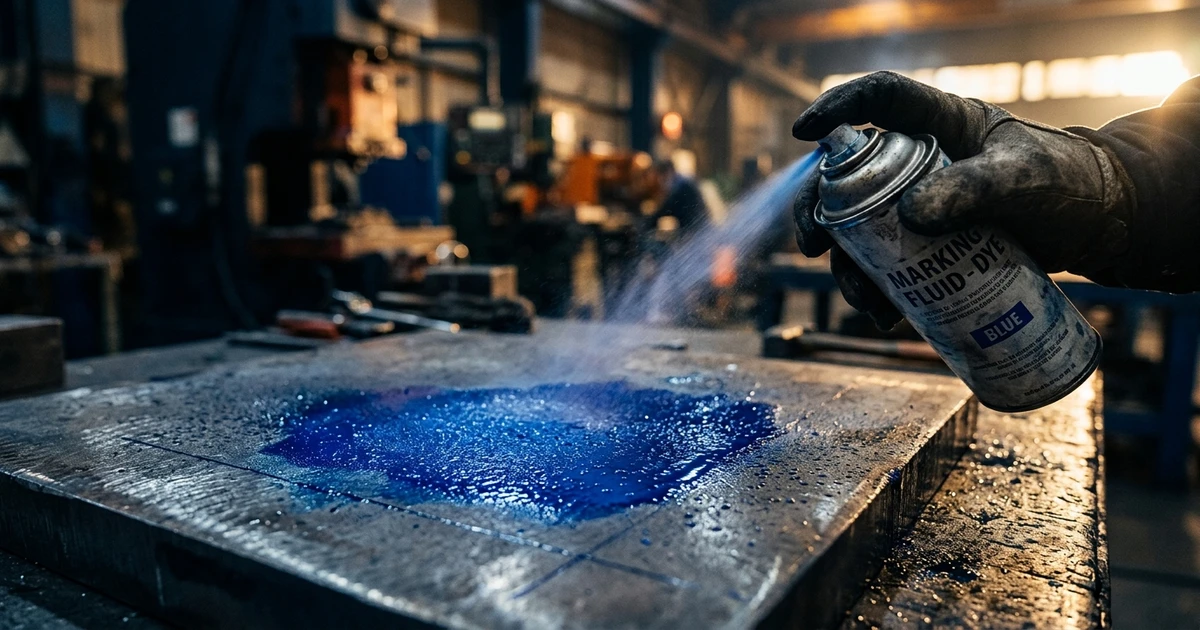
An aerosol marking fluid is a precision layout compound delivered in pressurised aerosol form, designed to deposit a thin, high-contrast film on metal and other engineering surfaces so that machinists and fabricators can scribe accurate reference lines before cutting, drilling, or machining operations. It works by releasing a dye-loaded solvent solution through an aerosol valve, with the solvent carrier evaporating rapidly after application to leave a clean, dry, uniformly coloured coat. For industrial operations that demand precision — from tool rooms and fabrication shops to aerospace component manufacture — the speed and consistency of aerosol delivery makes layout compounds an essential part of the workflow. Choosing the right formulation requires understanding the surface, the type of scribing operation, the working environment, and any applicable safety or regulatory constraints.
What Are Aerosol Marking Fluids and How Do They Work?
Aerosol marking fluids, commonly known as layout compounds or layout fluids, are chemically formulated coating systems designed to provide maximum visual contrast on polished, machined, or raw metal surfaces. The working principle is straightforward: when sprayed from a pressurised aerosol can, a fine mist of dye and solvent is deposited uniformly across the target surface. The solvent phase evaporates within seconds, leaving behind an adherent, coloured film that allows scribers, dividers, and centre punches to mark precise reference lines with clarity. As detailed in our guide on aerosol chemistry fundamentals, the solvent carrier and dye system must be carefully matched to ensure both rapid dry time and adequate adhesion to the substrate.
The aerosol format offers several performance advantages over traditional brush-applied compounds. Atomisation through the valve and actuator produces a finer, more uniform droplet distribution than a brush, which eliminates the risk of streaking, pooling, or uneven film thickness. Uniform film thickness directly affects scribing quality — an excessively thick film can cause the scriber tip to skate, while a film that is too thin lacks the contrast needed for visibility under workshop lighting conditions. The aerosol format also significantly reduces application time across large surface areas, making it particularly valuable in production environments where multiple workpieces must be marked out in rapid succession.
Aerosol marking fluids are distinct from aerosol paints and industrial spray coatings in one important respect: they are engineered to be temporary, scribing-compatible, and easily removable once layout operations are complete. This temporary nature is a core design requirement — the film must not interfere with subsequent machining, heat treatment, coating, or inspection operations. Understanding this temporary functionality is essential to selecting the right product for a given workflow.
- Deposits a thin, uniform, high-contrast dye film on metallic and engineering surfaces
- Aerosol delivery ensures consistent film thickness without brush marks or streaks
- Designed to be temporary — easily removable with appropriate solvent or cleaner
- Available in multiple colours for different surface types and lighting conditions
- Dry time is governed by the solvent system — typically seconds for aerosol-applied versions
Aerosol marking fluid deposited on a machined steel surface, showing the high-contrast layout compound film that defines scribing lines for precision metalworking operations.
Types of Aerosol Layout Fluids and Their Chemical Composition
The aerosol marking fluid category encompasses several chemically distinct product types, each formulated for different surface conditions, substrates, and performance requirements. The broadest classification distinguishes between solvent-based and water-based systems, though the vast majority of industrial aerosol layout compounds on the market use solvent-based carriers due to their faster dry times and superior adhesion on oily or coolant-contaminated metal surfaces. Within solvent-based systems, the choice of dye class, solvent blend, and binder resin determines the film's hardness, scribing response, and ease of removal. The industrial aerosol product category encompasses a wide range of formulations, and understanding the chemical basis of each type is essential for making the correct selection.
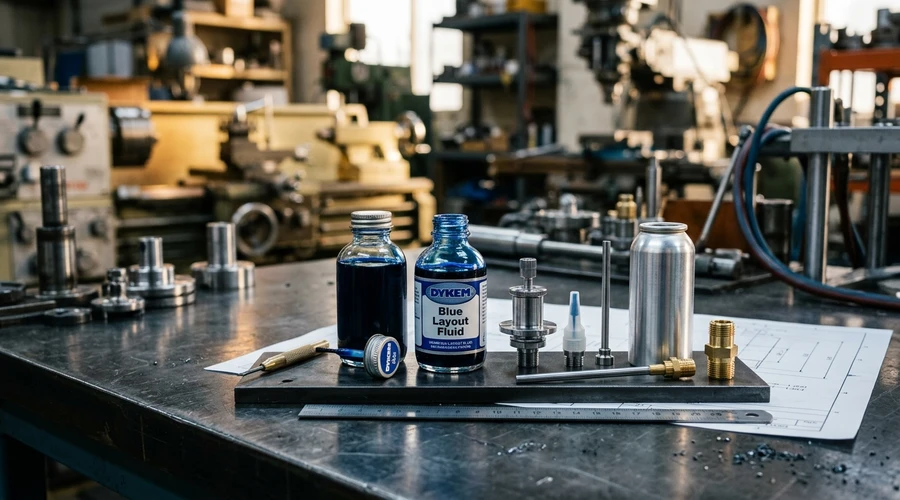
The classic machinist blue — historically associated with the Dykem brand — is the most recognisable product in this category. Its characteristic deep blue colour is derived from a soluble dye in a fast-evaporating aliphatic alcohol or ketone-based carrier, with a shellac or synthetic resin binder that provides adhesion to the metal substrate. The blue formulation was historically chosen because its colour provides maximum contrast against bare steel and cast iron, even under the warm incandescent lighting typical of traditional machine shops. Modern aerosol versions of machinist blue replicate this dye and binder chemistry in an aerosol-compatible concentrate, combined with a liquefied propellant — typically an LPG blend or dimethyl ether — that provides consistent spray pressure throughout the can's life.
Beyond the classic blue, aerosol layout fluids are available in red, white, yellow, and clear variants. Each colour serves a specific purpose: red and orange offer superior contrast on light-coloured metals such as aluminium and brass; white is used on dark or oxidised surfaces; yellow provides high visibility in low-light conditions. Clear or translucent variants are available for applications where surface finish inspection must continue during or after layout operations.
| Product Type | Primary Colour | Carrier Solvent Class | Best Surface Applications | Dry Time (Aerosol) |
|---|---|---|---|---|
| Machinist Blue (Classic) | Deep Blue | Aliphatic alcohol / ketone | Steel, cast iron, tool steel | 5–15 seconds |
| Layout Red | Red / Orange | Alcohol / aromatic blend | Aluminium, brass, copper | 5–20 seconds |
| White Layout Compound | White / Opaque | Alcohol-based | Dark metals, oxidised surfaces | 10–30 seconds |
| Yellow High-Visibility | Yellow / Fluorescent | Ketone-based | Low-light environments, castings | 5–15 seconds |
| Water-Based Layout Fluid | Blue / Various | Aqueous with co-solvent | Clean surfaces; eco-sensitive applications | 30–90 seconds |
| Scribe Line Indicator (Clear) | Translucent / Tinted | Light alcohol / mineral spirit | Finished surfaces; quality inspection contexts | 10–20 seconds |
The binder system is a critical but often overlooked component of the formulation. In shellac-based systems — historically the industry standard — the film is hard, brittle, and responds cleanly to scribing operations: the scriber tip cuts through to bare metal, leaving a bright silver line against the coloured background. Synthetic resin binders can offer better resistance to coolant fluids and oils, which is important in machining environments where parts may be wet before layout operations commence. The trade-off is that harder binder systems can be more difficult to remove and may leave trace residues if not cleaned thoroughly before coating or heat treatment.
Surface Compatibility and Preparation for Aerosol Layout Compounds
The adhesion and performance of any aerosol marking fluid is fundamentally dependent on the condition of the substrate surface at the time of application. Unlike paint systems that are designed for controlled application over prepared surfaces, layout fluids must frequently be applied in workshop environments where surfaces may carry traces of cutting oil, coolant, rust-preventive coatings, or atmospheric contamination. The aerosol solvent carrier partially dissolves and displaces light surface oil films during application, which is one reason why solvent-based systems outperform water-based alternatives in typical machining environments. However, heavy oil contamination or water films will prevent adequate adhesion and result in a beaded, patchy coating that compromises scribing accuracy. As explored in our coverage of aerosol manufacturing and formulation principles, the interaction between the formulation and the substrate surface energy governs adhesion performance across all aerosol-applied coatings.
For optimal performance, surfaces should be wiped with a clean, lint-free cloth before layout fluid application. On surfaces carrying cutting oil or coolant residues, a quick wipe with a solvent-dampened cloth — using the same solvent class as the layout fluid — will remove the majority of contaminating films without affecting the base metal. This surface preparation step is particularly important for aluminium, which oxidises rapidly in air and forms a thin aluminium oxide layer that can impair adhesion if the layout fluid's solvent carrier is not aggressive enough to partially penetrate this boundary. According to the ASTM International test method frameworks used for industrial coating adhesion assessments, surface energy and cleanliness are primary variables in determining adhesion performance for any thin-film coating system.
Surface roughness, while often discussed in the context of coating adhesion, has a more nuanced effect on layout fluid performance. On very highly polished surfaces — such as surface-ground reference plates or hardened and lapped die components — the layout fluid film tends to be thinner and may lift at the edges if disturbed. Slightly rougher surfaces, such as milled or filed finishes, provide more mechanical interlocking for the binder and improve film durability during scribing operations. The key is ensuring that the surface roughness does not itself obscure the scribed line — coarser surfaces require a thicker film to fill the surface profile and maintain contrast, which can be achieved by applying two light aerosol passes rather than a single heavy coat.
Substrate Compatibility Overview
- Mild and tool steel: Excellent compatibility with all solvent-based layout fluids; blue formulations provide best contrast
- Cast iron: Good adhesion; slightly porous surface may require a second coat for full coverage
- Aluminium alloys: Compatible with most formulations; red and orange colours preferred for contrast; avoid aggressively alkaline systems
- Brass and copper: Red or orange fluids recommended; confirm solvent compatibility with copper alloys before use on polished components
- Stainless steel: Good adhesion; verify that the formulation does not contain chloride-containing solvents that could contribute to stress corrosion in critical components
- Plastics and composites: Use only with formulations explicitly rated for the specific polymer class; many solvent systems will attack or craze engineering plastics
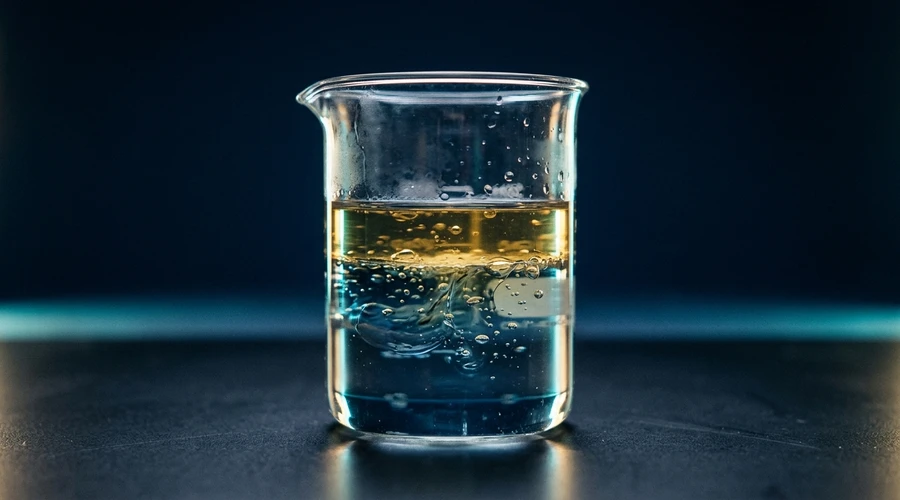
A comparison of aerosol layout fluid types in glass test containers, illustrating colour, viscosity, and film characteristics for different industrial marking applications.
Aerosol Delivery: Formulation and Propellant Considerations
Converting a layout fluid formulation into a viable aerosol product requires careful consideration of the propellant system, can and valve compatibility, and the concentration and viscosity of the dye-resin concentrate. The aerosol format introduces constraints that do not exist for brush-applied products: the formulation must remain stable and homogeneous under pressurised storage, the propellant must be compatible with the solvent and dye system, and the valve and actuator must be engineered to deliver the correct spray pattern and film thickness for layout applications. The concentrate-to-propellant ratio is a critical formulation parameter that governs spray quality, evaporation rate, and the final film characteristics. For deeper technical context on how propellant selection influences spray behaviour, see our detailed guide on aerosol propellants.
Liquefied petroleum gas blends — typically mixtures of butane, isobutane, and propane — are the most common propellant choice for solvent-based layout aerosols. LPG blends are miscible with most organic solvent carriers used in layout fluid concentrates, which means the propellant participates in the solvent evaporation process after atomisation and contributes to the rapid flash-off that enables the short dry times characteristic of aerosol marking fluids. Dimethyl ether is used in some formulations where the solvency of the propellant itself is beneficial, or where LPG is incompatible with specific dye or resin components. According to PubChem (NIH) physicochemical data, dimethyl ether has a boiling point of −24°C and high miscibility with polar solvents, making it particularly useful in alcohol-based layout fluid concentrates.
The valve and actuator design for layout fluid aerosols is typically configured for a wide fan spray pattern to facilitate coverage of large flat surfaces in a single pass. A standard continuous valve with a wide-angle actuator nozzle is the most common configuration. The orifice size is selected to balance output rate against droplet size — a larger orifice increases output but may produce larger droplets that create a thicker, less uniform film. Precision layout applications may benefit from actuators designed to produce a finer mist, which deposits a thinner, more uniform film that provides sharper scribed line definition. The National Fire Protection Association (NFPA) NFPA 30B standard governs the warehouse storage classification of flammable aerosol products, and most solvent-based layout fluids fall into Level 2 or Level 3 classifications depending on their heat of combustion content.
Propellant Selection Summary for Layout Fluid Aerosols
- LPG (butane/isobutane/propane blends): Most common; miscible with organic solvent carriers; contributes to rapid flash-off; flammable
- Dimethyl Ether (DME): High solvency; compatible with alcohol-based concentrates; lower flash point than LPG butane alone; flammable
- Compressed gases (N₂, CO₂): Non-flammable option for specialty applications; pressure drops with use; not miscible with concentrate, so separate phase consideration required
Colour Selection, Application Technique, and Industry Standards
Selecting the correct colour of aerosol layout fluid is a practical decision governed by the substrate colour, ambient lighting conditions in the working environment, and the nature of the scribing operation. The principle of maximum contrast underpins all colour selection decisions: the layout film colour must stand out sharply against the metal surface so that scribed lines are visible from normal working distances without the need for magnification or supplementary lighting. In tool rooms working under fluorescent or LED lighting on bright, polished steel surfaces, the classic deep blue formulation remains optimal. In foundry or casting environments where surfaces are darker, rougher, and may carry scale or sand inclusions, a white or high-visibility yellow compound provides better definition of scribed reference marks. For environments requiring fluorescent-enhanced visibility, formulations incorporating UV-reactive dye components are available from specialist suppliers.
Correct application technique is as important as product selection. Aerosol layout fluids should be applied at a consistent distance from the surface — typically 200–300 mm — with the can held perpendicular to the work surface and moved at a steady, even pace to ensure uniform film thickness. Overlapping passes by approximately 30–40% prevents thin-spots at pass edges. A single light coat is generally preferred over a single heavy application: multiple thin coats, each allowed to flash off before the next is applied, produce a more adherent, more consistent film than one thick coat, which may run or bubble on non-horizontal surfaces. Shaking the aerosol can thoroughly before use is essential to ensure the dye-resin concentrate is fully homogenised with the propellant and solvent, particularly after storage.
No formal international standard specifically governs the performance testing of aerosol marking fluids as a product category, though individual component test methods apply. Adhesion to the substrate can be assessed using cross-cut adhesion methods adapted from ASTM D3359 procedures, and abrasion resistance of the dry film is relevant in scribing simulation studies. Chemical resistance — particularly to coolant fluids and cutting oils — is evaluated using immersion or rub-off tests against the specific fluids used in the target application environment. In regulated markets, the formulation must comply with applicable VOC limits: CARB regulations in California specify limits by aerosol product category, and products sold into the EU must comply with the relevant industrial and professional use VOC directives under the EU Solvents Emissions Directive framework.
Removal, Residue Control, and Safe Handling of Aerosol Layout Compounds
One of the defining performance characteristics of a layout compound is the ease and completeness of its removal after marking operations are complete. A well-formulated aerosol layout fluid should wipe away cleanly from the substrate using a cloth dampened with the appropriate solvent, without leaving dye stains or resin residues that could interfere with subsequent processing steps. This requirement becomes critical in precision engineering contexts where residual dye could mask surface defects during inspection, contaminate hardening or heat treatment media, or cause adhesion failures in subsequent protective coating systems. Many facilities use an aerosol contact cleaner — such as the solvent-based systems discussed in the aerosol contact cleaner guide — as the removal medium, which provides both chemical dissolving action and a convenient aerosol delivery format for targeted application.
The solvent class used for removal must be compatible with the binder system of the layout fluid. Shellac-based formulations are readily removed with ethanol or isopropanol. Synthetic resin binders may require a ketone-based solvent — methyl ethyl ketone or acetone — for effective removal, particularly if the film has been allowed to cure or has been exposed to elevated temperatures. On aluminium components, acetone should be used with caution as it can attack certain anodised or chemical conversion coatings; in these cases, a diluted alcohol-based remover is the safer choice. Water-based layout fluids, where used, are removable with water alone, which is their principal environmental advantage, though they require cleaner surface conditions at application and longer dry times before scribing can commence.
Safe handling of aerosol layout fluids follows the general principles applicable to all flammable aerosol products. The OSHA HazCom 2012 standard requires that flammable aerosol products carry appropriate GHS classification labels, including the flame pictogram, "Danger" or "Warning" signal word, and relevant H-statements and P-statements covering flammability, inhalation precautions, and storage requirements. In the workplace, layout fluids should be used in areas with adequate ventilation to prevent solvent vapour accumulation above occupational exposure limits. The UK HSE, OSHA, and EU workplace health frameworks all set occupational exposure limits for common solvent vapours used in layout fluid carrier systems, including alcohols and ketones, and employers are required to assess and control inhalation risks as part of their chemical risk assessment obligations.
Removal Method Quick Reference
- Shellac-based blue/red compounds: Ethanol, IPA, or dedicated layout fluid remover; cloth wipe
- Synthetic resin compounds: MEK, acetone, or strong alcohol; may require brief soak on cured films
- Water-based compounds: Warm water with cloth; no hazardous solvent required
- Residue on anodised aluminium: Use diluted IPA; avoid ketone solvents
- Residue on stainless steel precision components: Confirm solvent is chloride-free; use dedicated aerosol contact cleaner
Frequently Asked Questions
What is an aerosol marking fluid and how does it work?
What is machinist blue and why is it used in precision metalworking?
What surfaces are compatible with aerosol layout compounds?
How do aerosol marking fluids differ from brush-applied layout compounds?
What solvents are typically used in aerosol layout fluid formulations?
How should aerosol layout fluid be removed after marking operations?
Are aerosol marking fluids covered by specific safety or environmental regulations?
Need Expert Aerosol Consulting?
Our team provides end-to-end aerosol technical consultancy — from formulation development and propellant selection to filling line setup, regulatory compliance, and market launch strategy.
Get a Free Consultation