NFPA 30B: Aerosol Warehouse Storage Classification
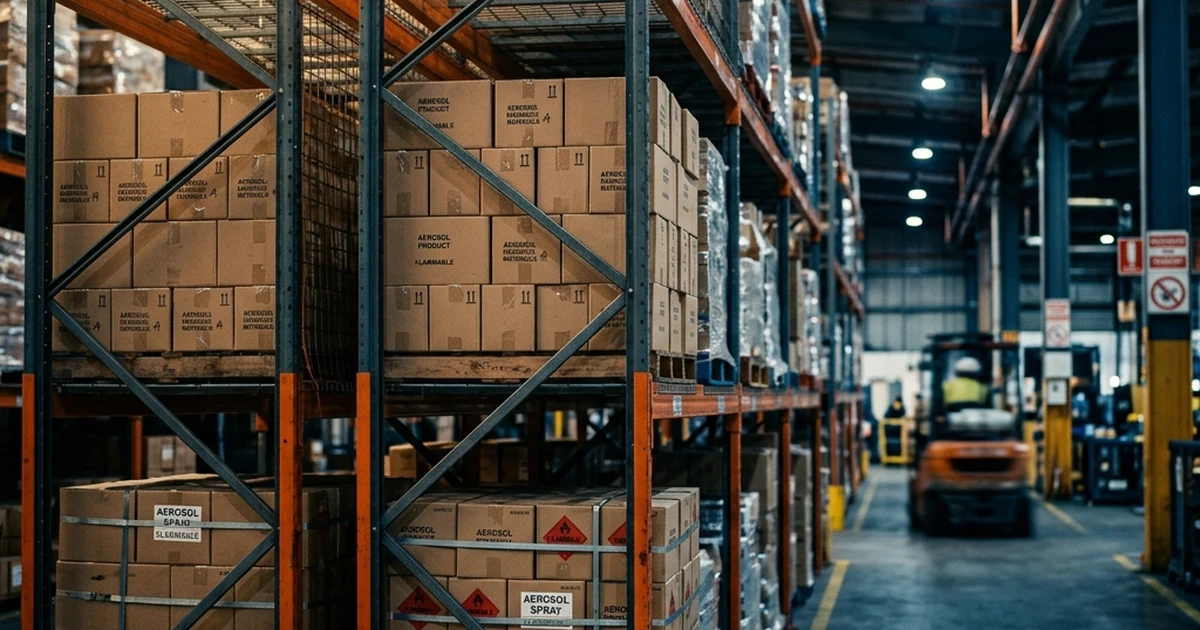
Guide Contents
- 1. Understanding NFPA 30B Aerosol Storage and Fire Protection
- 2. Aerosol Warehouse Storage Classification: Levels 1, 2, and 3
- 3. Sprinkler Design Aerosol Warehouse Requirements
- 4. NFPA Aerosol Fire Safety Standard Compliance Steps
- 5. Physical Chemistry: Heat of Combustion and Flammability Limits
- 6. Aerosol Fire Protection Standard and Facility Design
- 7. Frequently Asked Questions
The NFPA 30B aerosol storage standard provides crucial safety regulations for manufacturing, warehouse storage, and retail display of pressurized aerosol containers. It works by categorizing products based on their chemical heat of combustion, establishing corresponding fire suppression, containment, and sprinkler design rules. This matters for facility engineers because complying with these classifications prevents catastrophic structural losses due to high-intensity fires and explosive container rocketing. For a baseline discussion on pressure parameters and structural margins, consult our comprehensive guide on aerosol can safety explained.
NFPA 30B does not stand alone: it operates alongside NFPA 1 (the Fire Code) and workplace safety rules enforced by OSHA, forming a layered compliance framework that most warehouse operators must satisfy simultaneously. Because storage-level classification is driven by chemical heat of combustion rather than can size or brand, the choice of propellant made during formulation — LPG blends and DME sit at the flammable end of the spectrum, while compressed nitrogen or CO₂ sit at the non-flammable end, as detailed in our guide to aerosol propellants explained — has direct downstream consequences for how a finished product must be racked, segregated, and sprinklered once it reaches a distribution facility.
Understanding NFPA 30B Aerosol Storage and Fire Protection
The NFPA 30B aerosol storage standard is the globally recognized code for fire protection in facilities handling pressurized aerosol products. Pressurized containers behave differently than standard packaging during thermal exposure because their internal pressures increase rapidly with heat, leading to burst failures. When an aerosol can ruptures, the escaping liquefied propellant expands into a vapor cloud, fueling high-intensity flames and creating a rocket propulsion effect. To understand chemical hazards and safety data documentation, refer to our technical guide on understanding SDS, TDS, and COA documents.
The code is updated regularly by the National Fire Protection Association to account for changes in propellant technology, packaging materials, and fire suppression systems. NFPA 30B covers the entire life cycle of the product within commercial spaces, including manufacturing zones, warehousing, logistics hubs, and retail shelves. By implementing the segregation, barrier, and sprinkler rules mandated by the code, warehouse managers can contain thermal hazards and protect personnel and equipment.

Figure 1: Close-up of automatic sprinkler systems and protective piping installed above warehouse storage zones for aerosol packages.
Aerosol Warehouse Storage Classification: Levels 1, 2, and 3
Establishing the correct aerosol warehouse storage classification is the first step in designing a fire protection system. NFPA 30B divides aerosol products into three distinct hazard levels based on the chemical heat of combustion of the formulation. Level 1 represents the lowest hazard, typically reserved for water-based products with minimal flammable content. Level 2 covers products with moderate flammability, while Level 3 covers the highest-hazard formulations, which are filled with high concentrations of liquefied petroleum gases (LPG) or flammable solvents. To understand the thermodynamics and flash point behaviors of solvent components, read our guide on flash point and flammability testing.
This classification is not based on the volume of the can, but on the energy released during combustion. Water-based personal care mousse products, which contain high percentages of water and minimal propellant, release less heat and fall into Level 1 or 2. Conversely, solvent-based paint sprays or industrial lubricants, containing high percentages of propane, butane, and hydrocarbons, release immense energy and fall into Level 3. These levels dictate the allowable storage heights, pallet arrangements, and proximity to building walls.
| Aerosol Storage Classification | Chemical Heat of Combustion Range | Base Propellant & Solvent Types | Relative Fire Hazard Profile |
|---|---|---|---|
| Level 1 Aerosol | 0 – 20 kJ/g | Water-based, non-flammable propellants (N2, CO2) | Low (Equivalent to standard Class III commodities) |
| Level 2 Aerosol | 20 – 30 kJ/g | Water-in-oil emulsions, moderate flammable solvents | Moderate (Rapid fire spread, low rocketing potential) |
| Level 3 Aerosol | > 30 kJ/g | Hydrocarbon propellants, high-solvent systems | High (Intense heat generation, severe rocketing potential) |
Sprinkler Design Aerosol Warehouse Requirements
Designing the fire suppression system requires strict compliance with sprinkler design aerosol warehouse rules. Standard wet-pipe sprinkler systems designed for ordinary commodities are insufficient for Level 2 and Level 3 aerosols. If a fire starts in a Level 3 storage zone, the intense heat generation will open multiple sprinkler heads simultaneously, overloading the water supply. To prevent this, facilities must use early-suppression fast-response (ESFR) sprinkler heads and high-pressure water delivery systems. To cross-reference specific sprinkler testing standards and hazard categories, consult the official NFPA portal.
In addition to ceiling-level sprinklers, in-rack sprinklers are required for high-pile storage configurations. In-rack sprinklers deliver water directly to the center of the racking, suppressing flames before they can reach upper pallets. Water flow rates, discharge angles, and sprinkler spacing must be calculated using hydraulic design software. If the sprinkler density is too low, the fire will overwhelm the system, causing container rocketing and spreading fire throughout the warehouse.
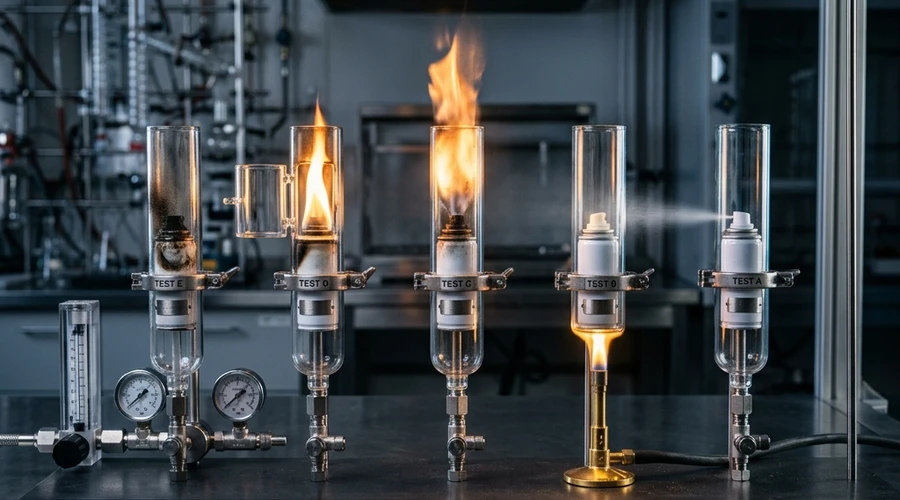
Figure 2: Infographic outlining the laboratory flammability test setup, measuring flame extension and ignition distances for aerosol classification.
NFPA Aerosol Fire Safety Standard Compliance Steps
Achieving compliance with the NFPA aerosol fire safety standard requires a systematic review of the storage facility. The first step is to perform a detailed inventory audit, identifying the classification level of every aerosol SKU stored in the facility. This classification data must be documented in a central register, listing the manufacturer SDS, the chemical heat of combustion, and the total volume of inventory. For details on workplace chemical hazard and handling requirements, see the official regulatory guidelines on OSHA chemical hazards. Facilities scaling up production volume should also review our aerosol manufacturing 101 guide for how formulation and filling-line decisions carry through to warehouse compliance.
Once the inventory is classified, the storage layout must be updated to match the maximum allowable quantities (MAQ) defined by NFPA 30B. Storing Level 3 aerosols beyond these limits requires separating them into specialized fire areas. These areas must be enclosed by fire-resistance-rated walls, and feature containment curbs, drainage systems, and automatic fire doors. Implementing these physical barriers isolates the hazard, preventing a fire in the aerosol zone from spreading to the rest of the facility.
Physical Chemistry: Heat of Combustion and Flammability Limits
The physical chemistry behind aerosol classifications is based on the chemical heat of combustion and the flammability limits of the ingredients. The heat of combustion is the total energy released as heat when a substance undergoes complete combustion with oxygen. During an incident, this value determines the heat release rate (HRR) and the growth rate of the fire. The thermodynamic properties of common aerosol propellants and organic solvents can be cross-referenced in the peer-reviewed PubChem database.
For Level 3 aerosols, the high concentration of hydrocarbon propellants creates flammability ranges (typically between 1.8% and 9.5% by volume in air). If a leak occurs in an enclosed storage room, a spark can trigger a deflagration. Therefore, facilities must install continuous gas detection systems and explosion-proof electrical fixtures. These sensors must link to ventilation systems, automatically increasing airflow to dilute gas concentrations if a leak is detected.
Aerosol Fire Protection Standard and Facility Design
Designing a compliant storage facility requires incorporating the aerosol fire protection standard into the initial architectural planning. Building codes require specific structural parameters for facilities storing large volumes of Level 2 and Level 3 aerosols. This includes installing explosion-relief venting on exterior walls, using non-combustible roofing materials, and setting up dedicated drainage channels to handle fire protection water runoff. To review transport classification and safety regulations for shipping finished products, see our guide on the UN Recommendations on Dangerous Goods, and our dedicated breakdown of DOT and UN aerosol transport regulations for hazmat classification requirements.
Drainage design is critical because burning liquefied propellants can float on water, spreading flames across the warehouse floor. Compliant facilities feature sloped floors and containment trenches that redirect water to an outdoor retention basin. Additionally, emergency responders must have access to fire hydrants, control valves, and foam systems. By integrating these safety features, facilities can manage high-intensity fires, protecting neighbors and the environment.
Frequently Asked Questions
What is the primary purpose of the NFPA 30B standard for aerosol products?
The primary purpose of the NFPA 30B standard is to establish fire protection and storage requirements for facilities that manufacture, store, or display aerosol products. Because pressurized aerosol cans represent a unique fire hazard during thermal exposure (due to potential container rocketing and rapid propellant release), the standard defines specific containment, sprinkler, and segregation rules to mitigate high-intensity fire risks.
How does NFPA 30B classify aerosol products into hazard levels?
NFPA 30B classifies aerosol products into three levels (Level 1, Level 2, and Level 3) based on their chemical heat of combustion. Level 1 aerosols contain low quantities of flammable propellants or solvents (heat of combustion ≤ 20 kJ/g), representing low hazards. Level 2 aerosols possess moderate hazards (20 to 30 kJ/g), while Level 3 aerosols represent the highest risk (> 30 kJ/g) due to high concentrations of flammable propellants like LPG.
What are the sprinkler design requirements for storing Level 3 aerosols?
Storing Level 3 aerosols requires high-density fire protection systems. This typically involves early-suppression fast-response (ESFR) ceiling sprinklers, often supplemented by in-rack sprinkler configurations. The system must deliver large water flow rates at high pressure to quickly absorb thermal energy, control potential container rocketing, and suppress fire propagation before structural containment is breached.
How is the chemical heat of combustion calculated for aerosol flammability levels?
The chemical heat of combustion is calculated by summing the mass fractions of each ingredient multiplied by their respective individual heats of combustion, as determined by laboratory oxygen bomb calorimeter testing. If a product's combined heat of combustion exceeds 30 kJ/g, it is automatically classified as a Level 3 flammable aerosol under NFPA 30B guidelines.
Does OSHA enforce NFPA 30B storage standards in manufacturing plants?
Yes, OSHA enforces workplace safety requirements for flammable aerosols under 29 CFR 1910.106. In many jurisdictions, local fire codes (such as the International Fire Code or NFPA 1 Fire Code) incorporate NFPA 30B by reference. Consequently, regulatory inspectors mandate compliance with NFPA 30B classification and warehouse storage rules to ensure general duty safety standards.
What is the rocketing effect of aerosol cans during a warehouse fire?
The rocketing effect occurs when an aerosol can is exposed to intense heat, causing the internal pressure to exceed the container's burst limit. If the can ruptures, the escaping liquefied propellant vaporizes instantly, acting as a thruster that launches the container across the warehouse. NFPA 30B mandates fire protection measures (such as chain-link mesh barriers) to contain rocketing cans and prevent the spread of fire.
Need Technical Support for Aerosol Formulations?
Partner with the Global Aerosols team to audit, scale up, and troubleshoot your aerosol chemistry, canister pressure calculations, filling lines, and safety systems.
Email: consulting@globalaerosols.com
Website: https://www.globalaerosols.com
Phone: +91 9819548320 +91 8169102990
About the Specialist
Absar Khan is the principal consultant and chemical formulation architect at Global Aerosols. He possesses cross-disciplinary engineering expertise spanning aerosol gassing systems, pharmaceutical manufacturing, sterile injectables, cosmetics, and green chemical plant setups. Absar leads scientific and engineering advisory teams supporting manufacturers globally in technology selection, GMP layouts, validation frameworks, and regulatory strategies.
LinkedIn Portfolio: Connect with Absar Khan on LinkedIn