HFO-1234ze Propellant: Low-GWP Alternative to HFC-134a Explained
Guide Contents
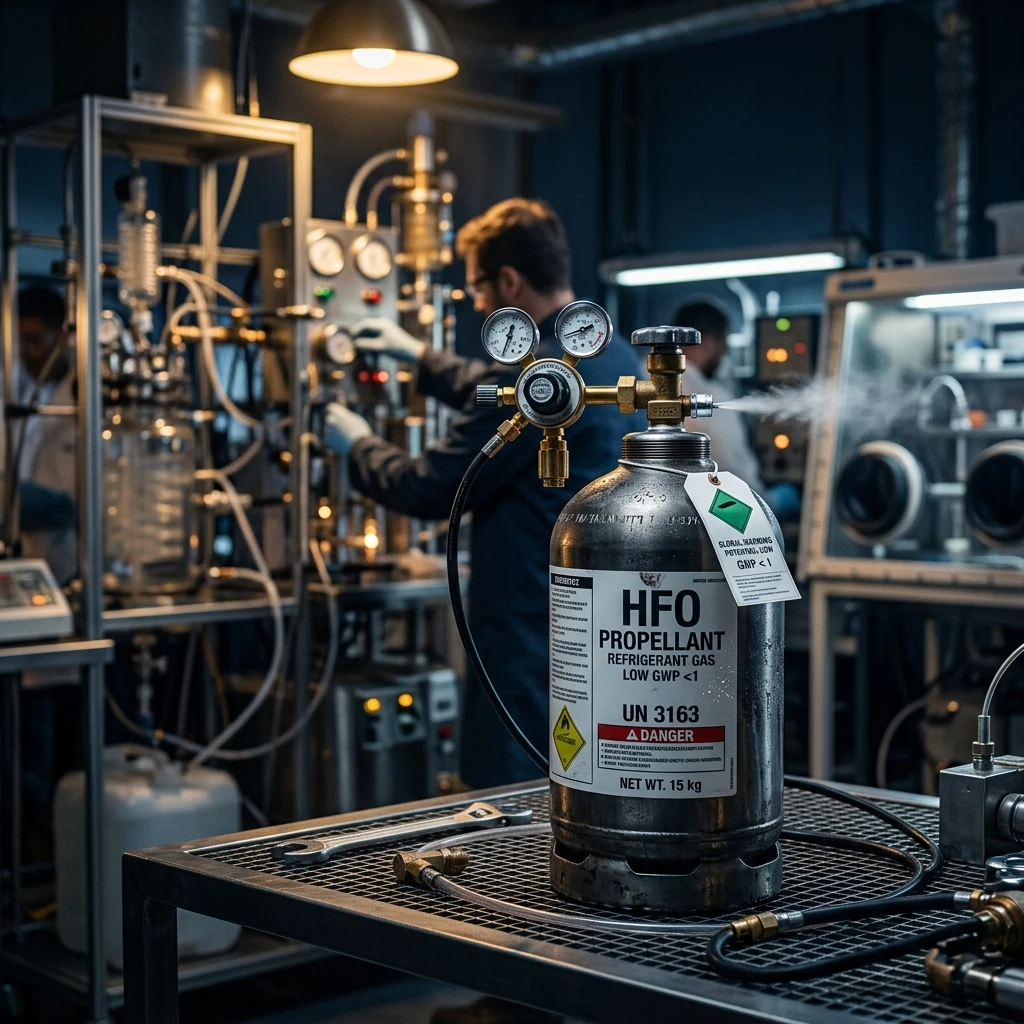
HFO-1234ze propellant (trans-1,3,3,3-tetrafluoropropene) is a next-generation hydrofluoroolefin developed as an environmentally sustainable substitute for high-GWP hydrofluorocarbons like HFC-134a. It operates by delivering consistent propellant vapor pressure profiles and spray characteristics, allowing manufacturers to maintain high-quality aerosol performance while complying with global fluorinated gas restrictions. Understanding the thermodynamic traits, flammability margins, and materials compatibility of this propellant is essential for successful formulation development and filling plant scale-up. For a general overview of pressure guidelines and testing standards, check out our guide on aerosol can safety explained.
As the aerosol industry faces increasing regulatory pressure to phase down hydrofluorocarbons, finding an alternative that offers low toxicity, negligible environmental impact, and non-flammability under standard conditions has become a top priority. HFO-1234ze meets these requirements, serving as a reliable substitute in technical dusters, safety-critical medical sprays, and specialized household products where highly flammable liquefied petroleum gases (LPG) present safety risks. This article provides a comprehensive technical analysis of HFO-1234ze to assist engineers and product developers during the transition process. For the compressed-air-duster category specifically, including ESD-safe formulation and handling requirements, see our guide to HFO alternatives in compressed air duster aerosols.
1. Molecular Structure & Thermodynamic Properties
The chemical behavior and physical stability of HFO-1234ze are determined by its molecular structure, which contains a reactive carbon-carbon double bond. This unsaturated double bond makes the molecule susceptible to rapid photo-oxidation in the lower atmosphere, resulting in a short atmospheric lifetime of only about two weeks. In comparison, HFC-134a has a saturated carbon chain that remains stable in the atmosphere for over a decade, contributing to its high global warming potential. Detailed physical properties can be found in the PubChem (NIH) database.
Thermodynamically, HFO-1234ze exhibits a lower vapor pressure curve than HFC-134a across normal operating temperatures. This lower pressure profile affects the atomization dynamics of the aerosol spray, as less gas expansion occurs when the concentrate is discharged. To achieve equivalent droplet size distributions, formulators must adjust the solvent package or modify the actuator orifice geometry. For a complete comparison of propellant options, consult our comprehensive guide on aerosol propellants.
| Physical Property Parameter | HFC-134a | HFO-1234ze (trans) | Dimethyl Ether (DME) |
|---|---|---|---|
| Molecular Formula | CF₃CH₂F | CF₃CH=CHF | CH₃OCH₃ |
| Boiling Point at 1 atm (°C) | -26.1 | -19.0 | -24.8 |
| Vapor Pressure at 20°C (bar absolute) | 5.7 | 4.2 | 5.1 |
| Liquid Density at 20°C (g/cm³) | 1.22 | 1.17 | 0.66 |
| Global Warming Potential (GWP₁₀₀) | 1430 | < 1 | 1 |
| Atmospheric Lifetime | 14 years | 14 days | 5.7 days |

Figure 1: Thermodynamic comparison of the vapor pressure curve of HFO-1234ze versus HFC-134a over standard industrial temperature ranges.
2. Environmental and Regulatory Context
The transition from hydrofluorocarbons to hydrofluoroolefins is driven by strict environmental regulations at both national and international levels. Under the Kigali Amendment to the Montreal Protocol, which is managed by the UNEP Ozone Secretariat, signatory nations are required to phase down HFC consumption to reduce greenhouse gas emissions. Because HFC-134a has a high global warming potential (GWP₁₀₀ = 1430), it is targeted for phase-out in non-essential aerosol products, making low-GWP alternatives necessary.
In the United States, the EPA Significant New Alternatives Policy (SNAP) program, details of which are available via the US EPA SNAP Program, lists HFO-1234ze as an acceptable substitute for HFC-134a in consumer aerosols. Similarly, the European Union's F-Gas Regulation has established strict allocation limits that have increased the cost of high-GWP gases, encouraging manufacturers to adopt sustainable options like HFOs. These environmental parameters are discussed further in our guide on propellant influence on aerosol performance.
- Kigali Amendment Goals: Aiming to reduce HFC consumption by over 80% by 2047 to prevent up to 0.5°C of global warming by 2100.
- EPA SNAP Status: Lists HFO-1234ze as acceptable for use in technical dusters, spray paints, and industrial formulations.
- F-Gas Compliance: Restricts the use of fluorinated greenhouse gases with GWPs above 150 in most retail consumer aerosols, accelerating HFO adoption in Europe.
3. Flammability and Safety Dynamics
A key advantage of HFO-1234ze over hydrocarbon propellants (such as propane and butane) is its non-flammable classification under standard temperature and pressure conditions. According to standard testing protocols like ASTM International E681, HFO-1234ze does not exhibit flammability limits in air at 20°C and 101.3 kPa. This characteristic makes it suitable for applications that require non-flammable propellants for safety or regulatory compliance. For details on flammability metrics, see our overview of aerosols.
However, at elevated temperatures (typically above 30°C), HFO-1234ze can form weakly flammable mixtures with air when exposed to a high-energy ignition source. The lower flammability limit (LFL) is approximately 7.0% by volume under these conditions, and its low burning velocity (less than 1.2 cm/s) classifies it as a Class 2L (weakly flammable) gas under ISO 10156 standards. Consequently, while HFO-1234ze is significantly safer than LPG or dimethyl ether, product developers must still evaluate flammability behavior when combining it with flammable solvents like ethanol or acetone.
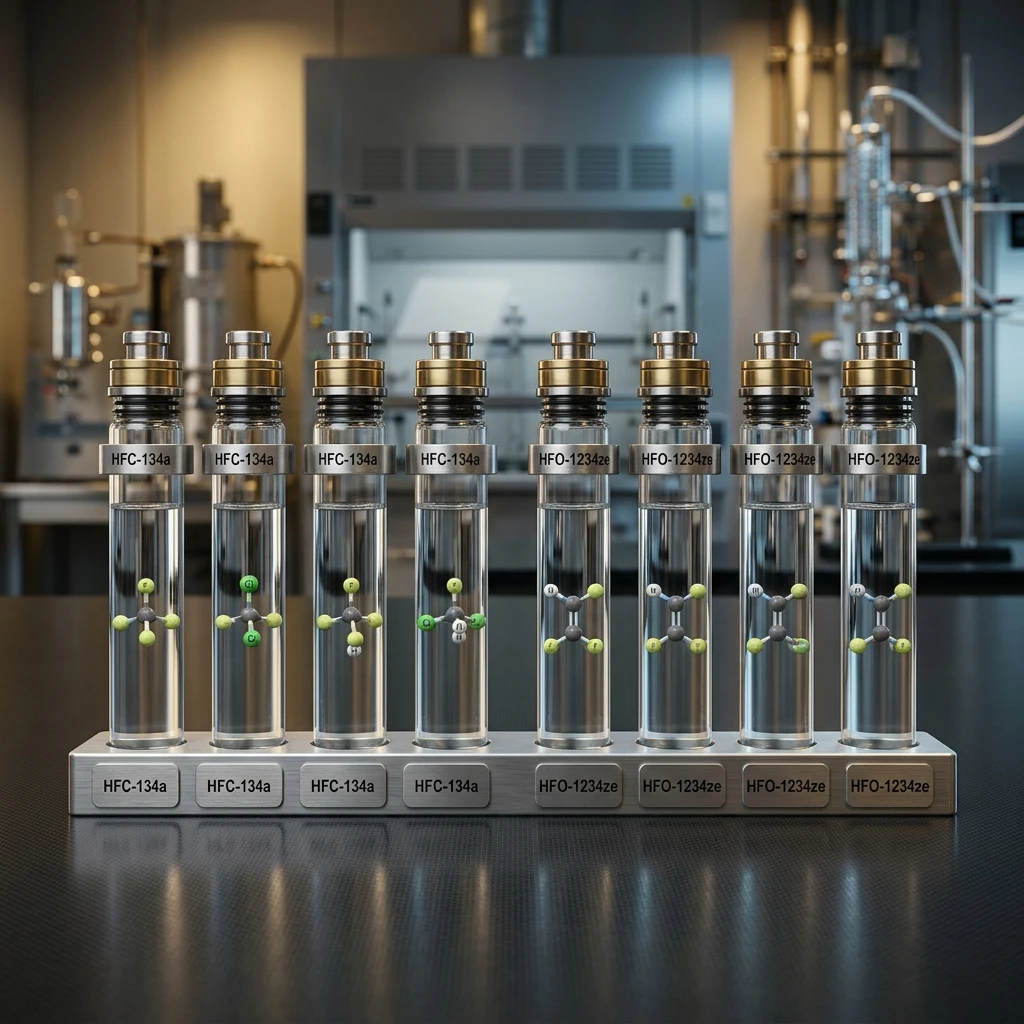
Figure 2: Environmental and flammability profile comparison of HFO-1234ze against HFC-134a and DME, showcasing its performance as a sustainable propellant.
4. Solvency Characteristics & Compatibility
HFO-1234ze has low solubility in water and a low Kauri-Butanol (KB) value, which limits its ability to dissolve active concentrates directly. Unlike dimethyl ether (DME), which acts as a powerful polar solvent, HFO-1234ze behaves as a pressurized diluent in most aerosol formulations. This requires the use of co-solvents to dissolve active ingredients and maintain a homogeneous single-phase system inside the container. To review phase separation mechanics, see our technical article on aerosol chemistry 101.
In paint and coating formulations, the low solvency of HFO-1234ze can lead to resin precipitation if the solvent package is not carefully balanced. Formulators typically include active solvents such as esters (butyl acetate) or ketones (methyl ethyl ketone) to maintain resin solubility. In water-based formulations, surfactant systems must be optimized to stabilize the emulsion, as HFO-1234ze can separate into a distinct liquid layer if the emulsion is disrupted. This separation can cause inconsistent discharge rates and spray performance.
5. Valve and Elastomer Gasket Guidelines
Elastomer compatibility is an important factor when selecting valve components for HFO-1234ze formulations. The propellant exhibits good compatibility with common valve gasket materials, causing minimal swelling or physical degradation during long-term storage tests. This helps prevent leakages and maintains consistent valve seal performance. Further details on elastomer performance are available on the NIST WebBook thermodynamic database.
Comparative studies show that EPDM (ethylene propylene diene monomer) and butyl rubber gaskets show very low volume change when exposed to pure HFO-1234ze, making them suitable choices for technical sprays and dusters. However, viton and certain nitrile rubbers can experience minor swelling if the formulation contains high concentrations of polar co-solvents. Valve selection should always include storage trials of the complete formulation to verify seal integrity over the shelf life of the product.
- EPDM Gaskets: Highly recommended for pure HFO-1234ze systems; exhibits low swelling and maintains physical properties over time.
- Butyl Rubber: Excellent barrier properties with low gas permeability, helping minimize propellant loss through the valve seals during storage.
- Nitrile (Buna-N): Acceptable for many formulations, but compatibility should be validated if active co-solvents are present.
6. Scale-Up & Plant Requirements
Integrating HFO-1234ze into existing aerosol filling lines requires evaluating plant safety and ventilation systems. Although HFO-1234ze is classified as non-flammable under standard ambient conditions, its potential to exhibit weak flammability at elevated temperatures means that safety precautions are still necessary. Manufacturing plants should ensure adequate air exchange rates in the gassing area to prevent the accumulation of heavy propellant vapors. For a detailed guide on filling plant setup, see aerosol manufacturing 101.
Because HFO-1234ze has a higher boiling point (-19.0°C) than HFC-134a (-26.1°C), the liquid propellant requires less sub-cooling during the charging stage to prevent flashing in the metering cylinders. Gassing pressures must be monitored to ensure complete filling without overpressurizing the containers. The finished aerosol cans must pass standard quality checks, including hot water bath testing to verify crimp integrity and detect any leakage prior to packaging.
Frequently Asked Questions
What is HFO-1234ze and why is it used as an aerosol propellant?
HFO-1234ze (trans-1,3,3,3-tetrafluoropropene) is a fourth-generation hydrofluoroolefin propellant designed to replace high-GWP hydrofluorocarbons (HFCs) like HFC-134a. It is widely adopted due to its near-zero Global Warming Potential (GWP < 1), non-flammable status under standard conditions, and compatibility with standard aerosol valve systems.
Is HFO-1234ze flammable under typical operating conditions?
Under standard atmospheric conditions at 20°C and 101.3 kPa, HFO-1234ze is classified as non-flammable by standard ASTM E681 tests. However, it exhibits a lower flammability limit (LFL) at elevated temperatures (above 30°C), classifying it as weakly flammable (Category 2L or Class 3 flammability depending on regional standards) under ISO 10156 rules.
How do the vapor pressure profiles of HFO-1234ze and HFC-134a compare?
HFO-1234ze exhibits a lower vapor pressure profile than HFC-134a across the entire operating temperature range. At 20°C, HFO-1234ze has a vapor pressure of approximately 4.2 bar (absolute), compared to 5.7 bar for HFC-134a, which requires formulation adjustments to maintain consistent atomization and discharge rates.
What are the environmental regulations driving the transition to HFO-1234ze?
The transition is primarily driven by international environmental agreements like the Kigali Amendment to the Montreal Protocol, which mandates a phase-down of high-GWP HFCs. Regional regulations, such as the EU F-Gas Regulation and US EPA SNAP rules, impose strict restrictions on using HFC-134a in consumer aerosol applications.
Are standard aerosol valve gaskets compatible with HFO-1234ze?
Yes, HFO-1234ze exhibits excellent compatibility with common aerosol valve gasket elastomers. Tests show it causes minimal swelling in EPDM and butyl rubber gaskets compared to other propellants, though minor swelling can occur when paired with aggressive co-solvents like dimethyl ether or ethanol.
Does HFO-1234ze require specialized gassing equipment on aerosol filling lines?
While HFO-1234ze does not require the strict explosion-proof equipment mandatory for highly flammable LPG propellants, manufacturing plants must still adapt ventilation and leak-detection systems. This is necessary because HFO-1234ze is heavier than air and can accumulate in low areas, and it can exhibit weak flammability at elevated temperatures.
Need Technical Support for Aerosol Formulations?
Partner with the Global Aerosols team to audit, scale up, and troubleshoot your aerosol chemistry, canister pressure calculations, filling lines, and safety systems.
Email: consulting@globalaerosols.com
Website: https://www.globalaerosols.com
Phone: +91 9819548320 +91 8169102990
About the Specialist
Absar Khan is the principal consultant and chemical formulation architect at Global Aerosols. He possesses cross-disciplinary engineering expertise spanning aerosol gassing systems, pharmaceutical manufacturing, sterile injectables, cosmetics, and green chemical plant setups. Absar leads scientific and engineering advisory teams supporting manufacturers globally in technology selection, GMP layouts, validation frameworks, and regulatory strategies.
LinkedIn Portfolio: Connect with Absar Khan on LinkedIn