Penetrating Oil Aerosols: Formulation Chemistry & Capillary Action Mechanisms
Guide Contents
- 1. Formulation Chemistry of a Penetrating Oil Aerosol
- 2. The Physics of Capillary Action Lubrication
- 3. Solvent Systems and Surface Tension Lowering
- 4. Breaking the Oxide Lock: Rust Loosening Mechanisms
- 5. Propellant Engineering and Dispensing Dynamics
- 6. Industrial Applications in MRO Maintenance
- 7. Frequently Asked Questions
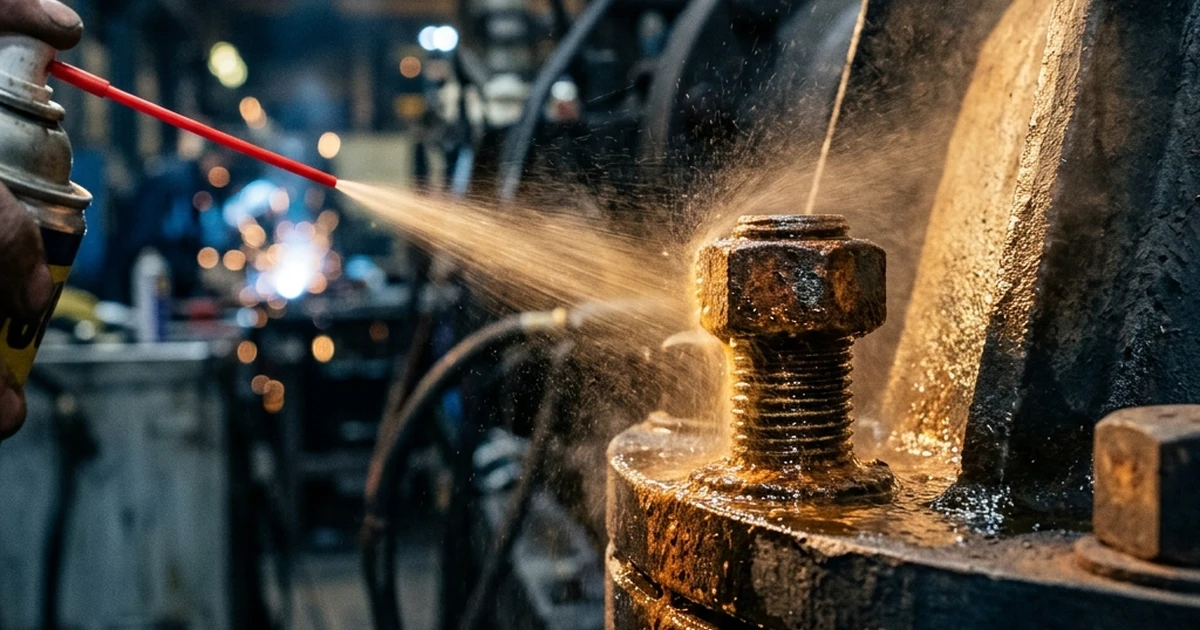
A penetrating oil aerosol is a highly specialized low-viscosity fluid designed to migrate into microscopic clearances to free seized fasteners and lubricate metal interfaces. It works by exploiting capillary pressure differentials that draw the chemical blend into tight spaces, displacing water and dissolving corroded matrices. This matters for industrial maintenance because it prevents mechanical shear failure of bolts during disassembly, reduces downtime, and provides short-term corrosion protection. To explore the broader operational principles of aerosolized systems, consult our foundational guide on how aerosol cans work.
As regulatory frameworks globally place tighter limits on Volatile Organic Compounds (VOCs) and greenhouse gases, the aerosol industry has faced pressure to phase out traditional fluorocarbons and optimize volatile organic systems. Traditional liquefied hydrocarbon propellants, such as butane, isobutane, and propane mixtures, are highly effective hydrophobic solvents but fail to mix with polar concentrates. Dimethyl ether (DME), represented by the chemical formula CH₃OCH₃, bridges this gap. By offering a unique combination of dual-phase miscibility, strong organic solvency, and an excellent environmental profile, DME has established itself as an indispensable chemical tool for modern aerosol product development.
Formulation Chemistry of a Penetrating Oil Aerosol
The formulation chemistry of a professional penetrating oil aerosol relies on a carefully balanced mixture of low-viscosity hydrocarbon carriers, surface-active wetting agents, and boundary lubricants. The carrier fluid must possess an exceptionally low surface tension to facilitate rapid wetting, while the lubricating phase must remain behind after solvent evaporation to prevent metal-on-metal galling. By adjusting these chemical properties, formulators can design products that wick into tight clearances in seconds, breaking down tough rust and road grime. For a deeper dive into the chemical components of aerosol concentrates, read our comprehensive guide on aerosol chemistry 101.
Unlike standard lubricating oils, which rely on heavy mineral bases to maintain a thick hydrodynamic film under load, penetrating lubricants prioritize mobility. The base fluid typically consists of light petroleum distillates or aliphatic hydrocarbons. These molecules exhibit low cohesive forces, allowing them to spread over metallic substrates and penetrate oxide layers. Specialized polar compounds, such as synthetic esters or naphthenic oils, are added to improve solubility. These polar elements target polar corrosion products, wicking through the rust to reach the underlying metal substrate.
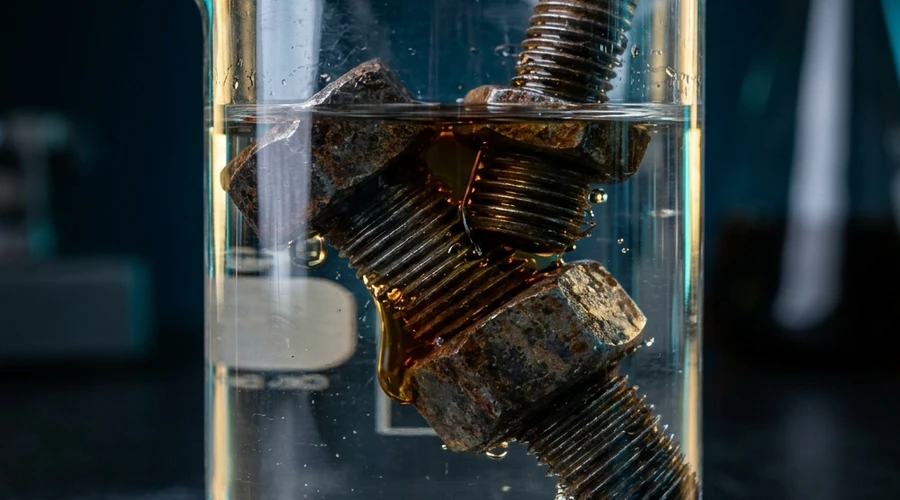
Figure 1: Cross-sectional diagram illustrating how capillary pressure draws the penetrating oil into the microscopic clearances of a seized metal fastener.
The Physics of Capillary Action Lubrication
The ability of a penetrating oil to climb upward into tight threads against gravity is governed by the physics of a capillary action lubricant. This behavior is mathematically modeled by the Washburn equation, which states that the rate of penetration is directly proportional to the liquid's surface tension and the cosine of the contact angle, and inversely proportional to its dynamic viscosity. Therefore, to maximize wicking speed into sub-micron gaps, the formulation must combine an extremely low viscosity with a contact angle that approaches zero on rusted steel. To study how these fluid properties are tested during laboratory scale-up, refer to our guide on moving formulations from lab to factory.
When a penetrating spray is applied to a seized bolt, the liquid forms a meniscus at the entrance of the thread clearance. If the contact angle is small (indicating high wetting behavior), the capillary pressure is positive, drawing the liquid inward. The wicking rate is critical; if the fluid is too viscous, the time required to travel the length of the thread exceeds practical maintenance limits. Naphthenic base oils with low pour points and light aliphatic solvents ensure the viscosity remains below 5 centistokes (cSt) at room temperature, facilitating rapid wicking through tight, thread-like channels.
| Fluid Property | Aliphatic Hydrocarbon Solvent | Naphthenic Carrier Oil | Synthetic Ester Solubilizer |
|---|---|---|---|
| Kinematic Viscosity at 40°C | 1.1 – 1.5 cSt | 3.0 – 5.0 cSt | 4.5 – 6.5 cSt |
| Surface Tension at 25°C | 21 – 23 mN/m | 26 – 28 mN/m | 28 – 30 mN/m |
| Hildebrand Solubility Parameter | 14.5 – 15.5 MPa^1/2 | 16.0 – 17.5 MPa^1/2 | 18.0 – 19.5 MPa^1/2 |
| Primary Performance Role | Micro-capillary wicking carrier | Boundary film lubrication | Resin and oxide dissolution |
Solvent Systems and Surface Tension Lowering
Lowering the surface tension of a penetrant spray chemistry is critical to achieving the wetting speeds required for heavy-duty industrial applications. Pure mineral oils have surface tensions around 30 to 32 mN/m, which prevents them from wicking into micro-fractures. In contrast, modern penetrating formulations use specialized solvent systems to lower the surface tension below 24 mN/m. The thermodynamic properties of these organic solvents can be cross-referenced in the peer-reviewed chemical database PubChem, which catalogs chemical structures, physical properties, and safety indices.
By blending low-surface-tension aliphatic fractions with highly polar solvents, formulation chemists can optimize both wetting speed and solvency. The aliphatic solvents act as highly mobile carriers that spread the mixture across the substrate. Meanwhile, the polar solvents target polar corrosion components, wicking through the rust to reach the underlying metal. This combination ensures that the active lubricant is carried directly to the seized interface, where it can perform its primary friction-reduction role.
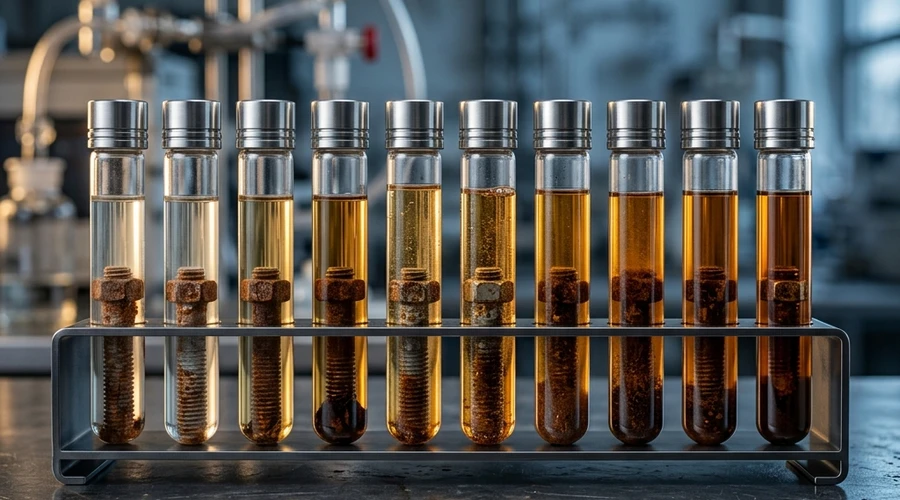
Figure 2: Quality control testing of penetrating oil wicking speeds and corrosion inhibition on standardized fasteners in a laboratory environment.
Breaking the Oxide Lock: Rust Loosening Mechanisms
A primary goal of any rust loosening aerosol is to break the mechanical lock created by iron oxides. Rust is porous and highly polar, containing hydrated iron oxides like FeO(OH) and Fe2O3. This crystalline structure creates a high-friction mechanical bond that locks threads together. To overcome this, the penetrant spray chemistry must dissolve the binding resins and waxy binders that hold the rust particles together, allowing the lubricating oil to coat the metal surfaces. To learn about other industrial aerosol cleaning formulations, read our technical overview of aerosol contact cleaners.
As the penetrating fluid wicks through the porous rust, it displaces moisture and introduces friction-reducing additives. The low dynamic viscosity allows the fluid to penetrate the oxide layer, reaching the underlying steel substrate. Once at the metal interface, the boundary lubricating additives form a protective film, reducing the friction coefficient and allowing the bolt to turn. This mechanical lubrication prevents thread stripping and galling during disassembly, preserving the fastener for reuse.
Propellant Engineering and Dispensing Dynamics
The delivery and atomization of a penetrating oil formulation are highly dependent on propellant engineering. Standard hydrocarbon propellants, such as propane and butane blends, are highly soluble in hydrocarbon solvents, reducing the viscosity of the concentrate inside the can. However, for penetrating sprays, carbon dioxide (CO2) is frequently chosen as a compressed gas propellant. CO2 is soluble in the solvent carrier under pressure, and as the product is discharged, the dissolved gas expands, producing a highly concentrated stream that delivers the active penetrant directly to the target area. To compare the performance of different propellants, read our analysis on aerosol propellants compared.
Using a compressed gas propellant like CO2 also helps maintain pressure consistency at low temperatures. In industrial maintenance, repair, and operations (MRO) settings, aerosols are often used in unheated environments. While liquefied hydrocarbon propellants experience a drop in pressure in cold conditions, CO2 maintains sufficient dispensing pressure, ensuring reliable performance. The selection of valve actuators with precise orifices also minimizes misting, ensuring the fluid is delivered directly to the seized threads.
Industrial Applications in MRO Maintenance
In industrial maintenance, repair, and operations (MRO), a high-performance MRO aerosol lubricant is essential for maintaining machinery and rebuilding corroded equipment. Seized pipe fittings, corroded structural bolts, and weathered machinery shafts require immediate treatment during teardowns. Applying a specialized penetrating spray reduces the torque required to loosen fasteners, protecting expensive components from damage. For advice on choosing a technical consultant to design custom MRO lubricants, read our guide on choosing the right aerosol consultant.
To evaluate these formulations, manufacturers rely on standardized testing protocols. Wicking speed is measured by wicking climb tests between polished steel plates, which can be cross-referenced with wicking standards on the official ASTM International portal. Boundary lubrication is evaluated using the ASTM D4172 four-ball wear test, which measures the wear scar diameter on steel balls under load. These tests ensure the lubricating film left behind can handle high loads, protecting threads during high-torque disassembly.
Frequently Asked Questions
What is the primary physical mechanism behind a penetrating oil aerosol wicking into tight threads?
The primary physical mechanism is capillary action, which is governed by the Washburn equation. By formulating a fluid with extremely low surface tension (typically below 25 mN/m) and low dynamic viscosity (below 5 cSt), the contact angle against corroded iron substrates approaches zero. This generates a high capillary pressure difference that draws the fluid inward against gravity into clearances as tight as a few micrometers.
How does solvent selection influence the performance of a penetrating oil formulation?
Solvent selection determines the overall solvency, evaporation rate, and flash point of the formulation. Aliphatic hydrocarbon solvents provide a low-viscosity carrier system that spreads rapidly across metal surfaces. Aromatic fractions or polar esters are often added to dissolve aged resins, oxidised greases, and surface contaminants, which clear the path for the lubricating oil to reach the metal interface.
Why are percentages of ingredients omitted in discussions of penetrating oil aerosol formulations?
Specific ingredient percentages are proprietary to chemical manufacturers and are guarded to protect intellectual property. Discussions in technical guides focus instead on chemical classes (such as aliphatic solvents, naphthenic carrier oils, and surface-active agents), solvency parameters, and mechanical performance. This provides engineers with the physical principles behind wicking and friction reduction without disclosing trade-secret recipes.
What role do propellants play in the delivery of a penetrating oil aerosol?
Aerosol propellants provide the pressure to atomise the concentrate into a controlled spray. Carbon dioxide (CO2) is frequently chosen as a compressed gas propellant for penetrating oils because of its high solubility in hydrocarbon solvents. This solubility creates a vapor-tap effect during discharge, producing a highly concentrated stream that delivers the active penetrant directly to the corroded joint without excessive misting.
How does surface rust inhibit or assist the wicking of a penetrating lubricant?
Rust (hydrated iron oxides) forms a highly porous, crystalline structure that acts like a microscopic sponge. This porosity creates a network of capillary channels. A properly formulated penetrating oil with a low contact angle will wick into this porous oxide structure rapidly. As the fluid penetrates, it displaces moisture and introduces friction-reducing additives, loosening the mechanical lock of the rusted threads.
What tests are standard for evaluating the performance of a penetrating oil aerosol?
Performance is commonly evaluated using ASTM standards. Wicking speed is measured by observing the rate of climb up a metal capillary or between vertical metal plates. Thread loosening torque is measured using standardized corroded nut-and-bolt assemblies in torque-to-release tests. Additionally, the ASTM D4172 four-ball wear test evaluates the boundary lubrication performance of the residual lubricating oil film left behind.
Need Technical Support for Aerosol Formulations?
Partner with the Global Aerosols team to audit, scale up, and troubleshoot your aerosol chemistry, canister pressure calculations, filling lines, and safety systems.
Email: consulting@globalaerosols.com
Website: https://www.globalaerosols.com
Phone: +91 9819548320 +91 8169102990
About the Specialist
Absar Khan is the principal consultant and chemical formulation architect at Global Aerosols. He possesses cross-disciplinary engineering expertise spanning aerosol gassing systems, pharmaceutical manufacturing, sterile injectables, cosmetics, and green chemical plant setups. Absar leads scientific and engineering advisory teams supporting manufacturers globally in technology selection, GMP layouts, validation frameworks, and regulatory strategies.
LinkedIn Portfolio: Connect with Absar Khan on LinkedIn