Two-Component Aerosol Systems: 2K Mixing Valves Guide
Guide Contents
- 1. Dual Chamber Aerosol Can Designs: Keeping Components Isolated
- 2. 2K Aerosol Mixing Valve Mechanics: Precision Fluid Merging
- 3. Physical Chemistry of Reactive Aerosol Formulations
- 4. Atomization Physics and Spray Pattern Control
- 5. Industrial Applications and Performance Standards
- 6. Compliance, Safe Handling, and Manufacturing Challenges
- 7. Frequently Asked Questions
A two-component aerosol system is a highly advanced packaging technology designed to keep reactive chemicals separated until the moment of application. By segregating the active resin from its catalyst or hardener, these systems prevent premature cross-linking, thereby solving the short-pot-life limitation inherent to high-performance coatings, adhesives, and sealants. This article explores the engineering behind dual-chamber cans, the mechanics of co-dispensing mixing valves, the physical chemistry of reactive formulations, and the industrial standards governing their safety and validation. For a baseline discussion on pressure parameters and structural margins, consult our comprehensive guide on aerosol can safety explained.
In standard one-part (1K) packaging, formulations dry purely via solvent evaporation, yielding linear polymer chains that remain vulnerable to solvent attack and physical abrasion. By contrast, a two-component (2K) system introduces a distinct chemical curing agent that reacts with the resin backbone, constructing a highly dense, cross-linked, three-dimensional thermoset structure. This transformation establishes premium barrier properties, unmatched chemical and weather resistance, and high shear strength, delivering professional paint booth results in a portable, convenient aerosol format.
Dual Chamber Aerosol Can Designs: Keeping Components Isolated
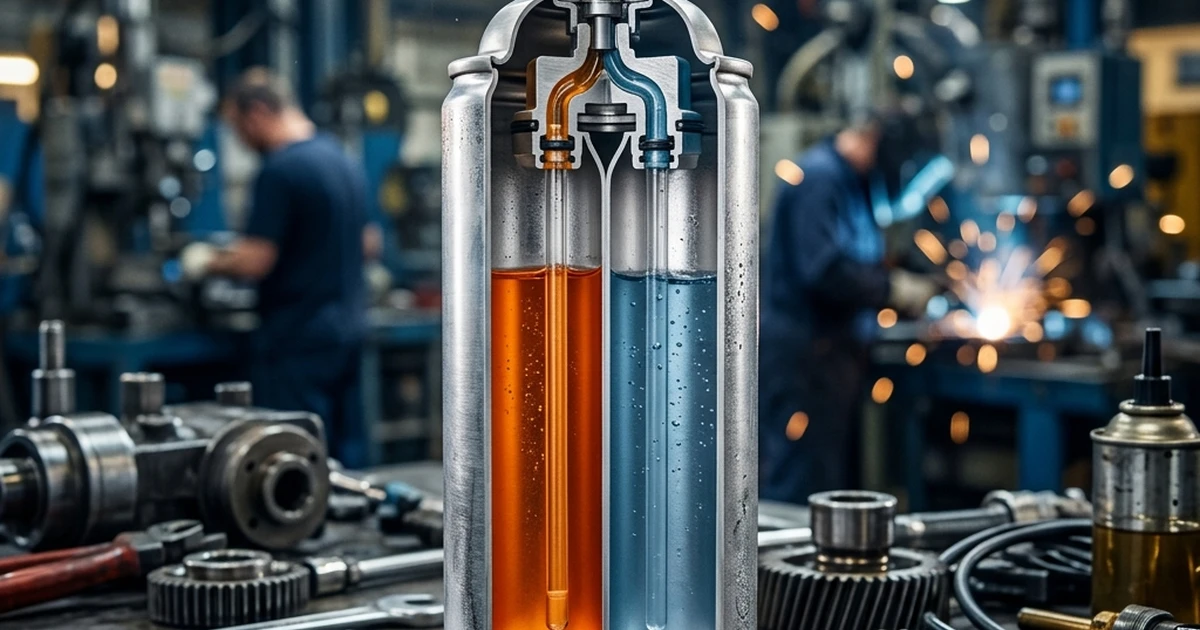
To prevent premature polymerization during storage, a two-part aerosol product relies on robust mechanical isolation techniques. Modern packaging designs utilize concentric cylinders, internal glass or aluminum cartridges, or flexible multi-layered bags to maintain absolute separation between the base formulation and its chemical activator. The structural integrity of these barriers must resist pressure spikes during transport while remaining easy to rupture when the user initiates activation. For details on general packaging layouts, see our overview on the types of aerosol systems explained.
In standard internal cartridge designs, the outer aluminum cylinder is charged with the primary resin base, solvent carriers, and liquefied gas propellant. A smaller aluminum or plastic cartridge containing the concentrated activator is suspended directly beneath the valve assembly or crimped onto the bottom dome of the can. This inner compartment is isolated by a polymer diaphragm or a thin, impact-breakable foil membrane. Because the propellant gas generates a high pressure profile inside the outer cylinder, the seal design must prevent any vapor phase diffusion of the curing agent across the seal boundary, which would trigger local gelation and render the system useless.
To activate the can, the user presses or twists a plunger located at the bottom dome using a specialized key. This action drives an internal cutting pin or puncture rod upward, slicing through the cartridge membrane. The hardener is instantly propelled into the main body of the can by the pressure differential and physical agitation. The user must shake the container vigorously for at least two minutes to ensure homogeneous dispersion of the two phases prior to actuation. Without proper mixing, areas of uncross-linked prepolymer will fail to cure on the target substrate, leading to adhesion failure and poor barrier properties.
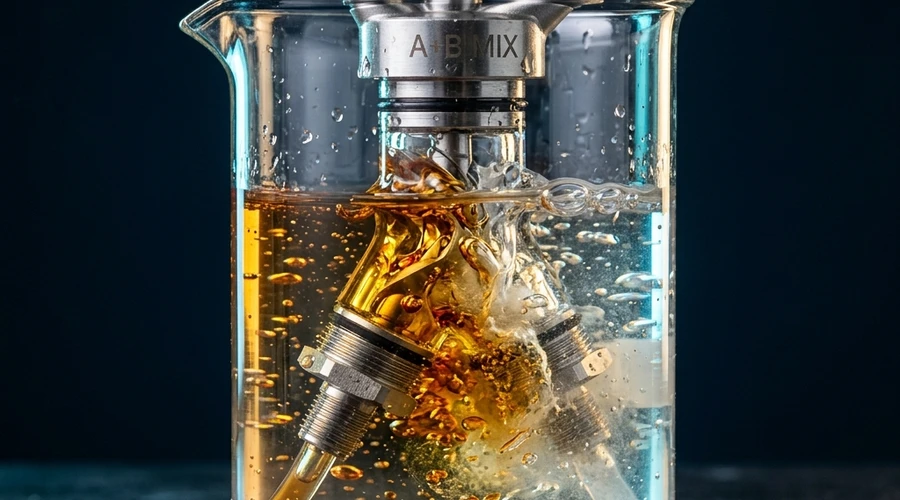
Figure 1: Cutaway engineering view of a dual-chamber aerosol can showing the isolated inner cartridge containing the catalyst and the primary resin chamber under propellant pressure.
2K Aerosol Mixing Valve Mechanics: Precision Fluid Merging
The core challenge of co-dispensing non-pre-mixed systems lies in the design of the 2K aerosol mixing valve. Unlike standard single-component valves, a true 2K valve must simultaneously meter two separate fluid streams in a precise volumetric ratio, combining them either inside a micro-mixing chamber just below the stem or externally within the actuator nozzle. Achieving this requires specialized stem orifices, concentric springs, and distinct gasket systems that open concurrently upon actuator depression. For general valve cup components, view our guide on how aerosol cans work.
Concentric dual-path valves represent a major engineering milestone in aerosol design. These valves feature an outer concentric channel for the base resin formulation and a central, coaxial conduit for the hardener. Each path is sealed by a dedicated elastomer gasket. When the actuator button is depressed, both seals yield simultaneously, allowing the pressurized fluids to travel upward. The ratio of the two components is tightly controlled by the relative cross-sectional areas of the stem orifices. Because viscosity differences between resins and catalysts can exceed several hundred centipoise, orifice geometry must be customized to prevent one component from back-pressuring or blocking the other, which would drift the stoichiometric ratio.
Once the components pass the valve stem, they enter a micro-mixing chamber or a static mixing nozzle located within the actuator assembly. Static mixers utilize a series of helical baffle elements that repeatedly divide, stretch, and fold the fluid streams, transforming the parallel laminar flows into a fully blended, homogeneous mixture. The pressure drop across these mixers must be balanced against the vapor pressure of the propellant to prevent premature vaporization (flashing) inside the nozzle, which would disrupt the spray pattern and yield a bubbly, uneven surface finish. For details on conventional propellant and valve choices, refer to our comprehensive guide on aerosol propellants.
| System Type | Separation Method | Mixing Location | Typical Pot Life | Application Focus |
|---|---|---|---|---|
| Internal Cartridge Cans | Puncture-to-release bottom cartridge | Main outer chamber (shaken by user) | 8 to 24 hours | Automotive refinishing, marine clear coats |
| Co-dispensing Concentric Cans | Coaxial dual chambers with concentric valve | Actuator nozzle (static mixer) | Continuous (no curing inside can) | Polyurethane structural foam, adhesive sealants |
| Bag-on-Valve (BoV) Dual Systems | Internal flexible bag vs. propellant space | External spray head static mixer | Instantaneous at nozzle tip | Sterile medical adhesives, cosmetics |
Physical Chemistry of Reactive Aerosol Formulations
Formulating a reactive aerosol formulation requires balancing rapid polymer cross-linking kinetics with the physical limitations of aerosol packaging. The primary chemistries deployed in these systems are two-component polyurethane (2K PU) and two-component epoxy systems. In 2K epoxies, the outer chamber contains a liquid bisphenol-A or bisphenol-F epoxy resin dissolved in volatile organic solvents like methyl ethyl ketone (MEK) or butyl acetate. The inner compartment houses a polyamine or polyamide curing agent. Upon activation, the amine hydrogen atoms react with the terminal oxirane rings of the epoxy prepolymer, opening the rings and establishing strong covalent ether linkages.
In two-component polyurethane systems, the reaction proceeds via the addition polymerization of polyisocyanates (typically hexamethylene diisocyanate or diphenylmethane diisocyanate prepolymers) and polyols (such as hydroxyl-terminated polyesters or polyethers). The reaction rate is highly temperature-dependent and is often moderated by tertiary amine or organometallic catalysts (like dibutyltin dilaurate). The solvent package must be entirely free of active hydrogen atoms; utilizing alcohols or water-contaminated solvents would trigger premature gelation or generate carbon dioxide gas, leading to uncontrollable pressure build-ups inside the can. The propellant itself must also be chemically inert toward the reactive monomers; hydrocarbon propellants like propane and butane are generally preferred over reactive options. For a deep dive into solvent and additive interactions, view our guide on aerosol chemistry 101.
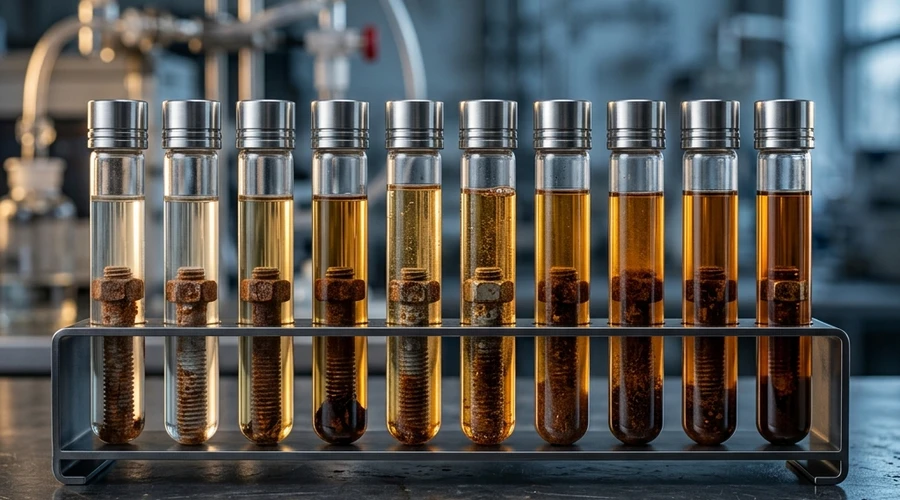
Figure 2: Performance comparison chart of 2K aerosol systems versus standard 1K systems, highlighting differences in solvent resistance, film hardness, and adhesion characteristics.
Atomization Physics and Spray Pattern Control
Achieving a flawless surface finish with an aerosol epoxy spray or polyurethane coating requires careful management of atomization physics. When the mixed formulation exits the actuator orifice, the sudden pressure drop causes the dissolved propellant to transition rapidly from liquid to gas. This rapid expansion — known as flash evaporation, or flash boiling — shatters the liquid stream into a fine mist of droplets. The droplet size distribution is determined by the formulation's viscosity, the propellant-to-concentrate ratio, and the internal design of the actuator nozzle.
For high-viscosity 2K formulations, standard mechanical breakup actuators are insufficient. Instead, engineers utilize fan-spray actuators featuring a wide, flat spray profile that mimics the atomization characteristics of a professional paint gun. These actuators often incorporate a rotating spray nozzle, allowing the operator to adjust the fan orientation from vertical to horizontal. The viscosity of the mixed concentrate must be kept low enough during the spray window to allow droplets to flow together on the substrate, creating a smooth, level wet film (known as orange-peel mitigation). However, if the viscosity is too low, the coating will sag or run on vertical surfaces.
Because the curing reaction begins immediately upon activation, the viscosity of the mix inside the can increases continuously over time. This reduces the atomization efficiency as the application progresses. As the pot life limit is approached, the mean droplet size increases, leading to splattering and an uneven texture. To counter this, formulations are designed with a viscosity plateau, where the viscosity remains stable for the first few hours before rising sharply. Learn more about actuator design and nozzle geometry in our detailed article on aerosol actuators 101.
Industrial Applications and Performance Standards
Two-component aerosol systems are widely used in sectors that require high-durability surface finishes without the setup and cleanup overhead of bulk pneumatic spray equipment. In the automotive aftermarket, mobile scratch repair and panel refinishing rely on 2K polyurethane clear coats to match the UV resistance and stone-chip protection of OEM factory finishes. In industrial maintenance, spot repairs on steel structures, pipelines, and chemical storage tanks are executed using 2K zinc-rich epoxy primers, which provide active galvanic protection against harsh environmental exposure.
The performance of these coatings is validated against stringent standards set by organizations like ASTM International. For instance, paint adhesion to steel substrates is measured using the ASTM D3359 cross-cut tape test, where 2K epoxy coatings routinely achieve the highest rating (5B) due to their polar hydroxyl groups bonding covalently with the metallic substrate. Chemical and solvent resistance is validated via ASTM D5402 solvent rub tests; a fully cross-linked polyurethane clear coat must withstand more than 200 double rubs with methyl ethyl ketone (MEK) without showing signs of softening or gloss reduction. Salt spray testing (ASTM B117) is also used to evaluate corrosion prevention, with 2K epoxy coatings frequently surpassing 1,000 hours of continuous exposure. For details on chemical scale-up validation, see our article on from lab to commercial launch.
Compliance, Safe Handling, and Manufacturing Challenges
Manufacturing and packaging two-component systems introduces several engineering challenges. The filling process must be carried out in a dry, humidity-controlled environment, particularly when handling polyisocyanates that react with moisture to produce insoluble polyureas and CO₂ gas. The filling line typically utilizes a two-stage filling process: the outer can is filled with the resin concentrate, crimped with the valve-and-cartridge assembly, and gassed with propellant, while the inner cartridge is filled and sealed separately under nitrogen purging before assembly.
From a regulatory standpoint, these products must comply with transport safety rules overseen by organizations such as the US Department of Transportation (DOT) and European Aerosol Dispensers Directive (ADD). Every aerosol container must undergo hot water bath testing to verify structural integrity and leak resistance under elevated temperatures, ensuring the internal pressure does not exceed safe burst ratings. In addition, volatile organic compound (VOC) emissions must comply with regional limits, such as those established by the California Air Resources Board (CARB) and European REACH protocols. For an overview of general manufacturing safety, refer to our comprehensive guide on aerosol manufacturing 101.
Frequently Asked Questions
What is a two-component (2K) aerosol system?
A two-component (2K) aerosol system is a specialized packaging design that houses two reactive ingredients (typically a resin and an activator/catalyst) in separate chambers within a single can. By maintaining absolute isolation during storage, the system prevents chemical cross-linking until an internal barrier is mechanically ruptured or a dual-channel valve is actuated immediately before application.
How does a 2K aerosol mixing valve prevent curing inside the valve assembly?
In dual-channel valve systems, the reactive components are routed through separate vertical stem passages and merge only within the actuator assembly or a disposable external static mixing nozzle. In internal rupture systems, once the components are activated and mixed inside the main chamber, the chemical pot life begins, and the entire can must be used within a specified timeframe (typically 8 to 48 hours) before it cures solid.
What are the main advantages of using 2K aerosols over standard 1K sprays?
Two-component systems yield significantly higher chemical resistance, weather durability, hardness, and adhesion compared to one-component (1K) air-dry systems. By utilizing reactive chemistry like epoxies or polyurethanes, they cure through cross-linking polymerization rather than simple solvent evaporation, matching the quality of professional pneumatic spray guns.
Which industries utilize two-component aerosol systems?
They are heavily utilized in automotive refinishing (such as 2K epoxy primers and polyurethane clear coats), industrial maintenance (for high-durability anti-corrosion barriers), marine paint repairs, and specialized construction adhesives or structural polyurethane foams.
How is the activation mechanism triggered in a dual-chamber aerosol can?
Most internal-cartridge cans feature a metal pin or plunger at the bottom of the can. The user depresses or twists this pin using a supplied plastic key or button, which pushes a rod upward to rupture the inner cartridge membrane. This allows the catalyst to flow into the outer chamber, where shaking distributes it through the resin phase.
Can a 2K aerosol can be refilled or reused after the pot life has expired?
No, once the internal chemical barrier is broken and the components mixed, the cross-linking reaction is irreversible. If any formulation remains inside the can past its chemical pot life, it will solidify, rendering the dip tube, valve, and actuator permanently clogged and unusable. The cans are single-use disposable items.
Need Technical Support for Aerosol Formulations?
Partner with the Global Aerosols team to audit, scale up, and troubleshoot your aerosol chemistry, canister pressure calculations, filling lines, and safety systems.
Email: consulting@globalaerosols.com
Website: https://www.globalaerosols.com
Phone: +91 9819548320 +91 8169102990
About the Specialist
Absar Khan is the principal consultant and chemical formulation architect at Global Aerosols. He possesses cross-disciplinary engineering expertise spanning aerosol gassing systems, pharmaceutical manufacturing, sterile injectables, cosmetics, and green chemical plant setups. Absar leads scientific and engineering advisory teams supporting manufacturers globally in technology selection, GMP layouts, validation frameworks, and regulatory strategies.
LinkedIn Portfolio: Connect with Absar Khan on LinkedIn