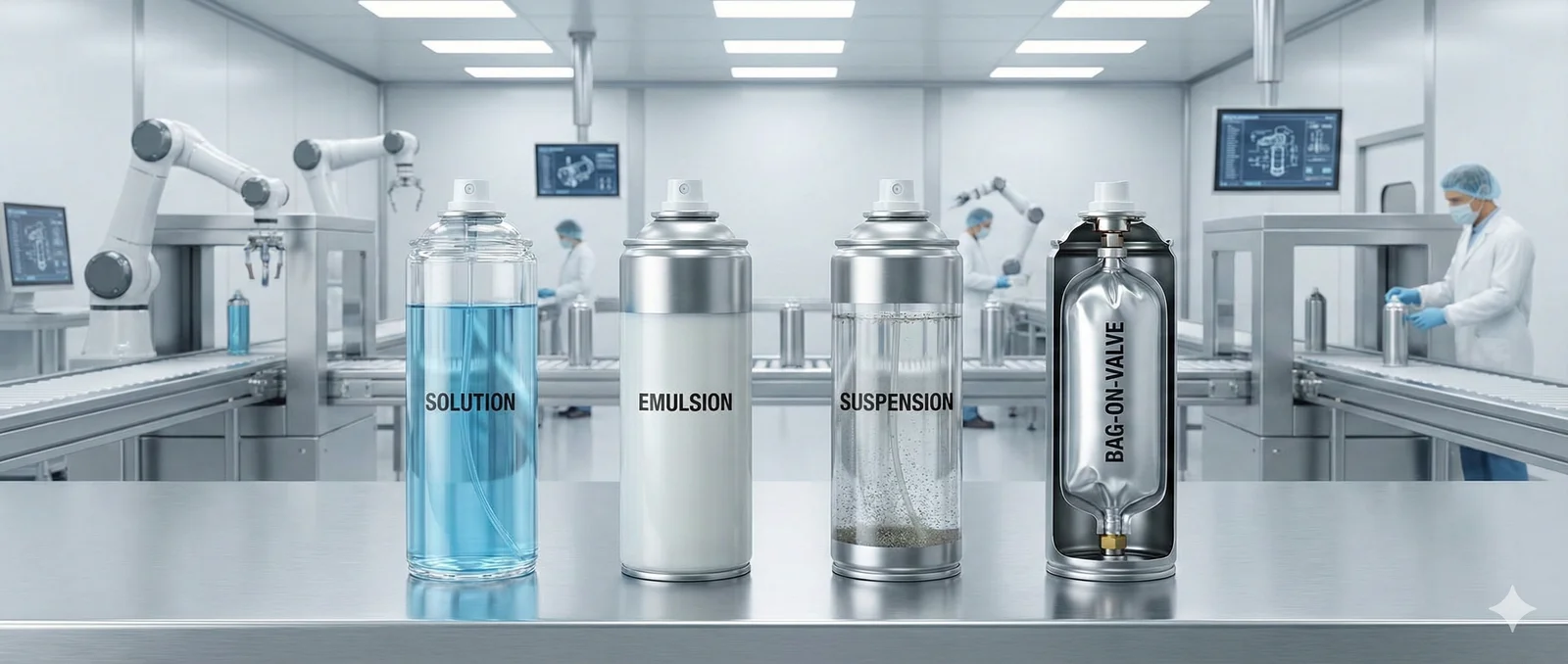
Types of Aerosol Systems: Solution, Emulsion & BOV
Guide Contents
- 2. Introduction – Why Understanding Aerosol Systems Is Critical for Startups
- 3. What Is an Aerosol System? (Basic Technical Overview)
- 4. Solution Aerosol System
- 5. Emulsion Aerosol System
- 6. Suspension Aerosol System
- 7. Bag-on-Valve (BOV) Aerosol System
- 8. Comparison: Solution vs Emulsion vs Suspension vs BOV
- 9. How to Select the Right Aerosol System for Your Product
- 10. Common Failure Problems in Each Aerosol System
- 11. Commercialization Readiness & Regulatory Overview
- 12. How Global Aerosols Supports Aerosol System Selection
- 13. External Technical References (For Further Reading)
Introduction – Why Understanding Aerosol Systems Is Critical for Startups
Many first-time aerosol entrepreneurs fail due to incorrect system selection rather than formulation chemistry errors. Each aerosol system behaves differently under pressure, temperature, and storage conditions.
Poor system selection leads to:
- Product instability and phase separation
- Valve clogging and spray failure
- Regulatory non-compliance
- High commercial rejection rates
What Is an Aerosol System? (Basic Technical Overview)
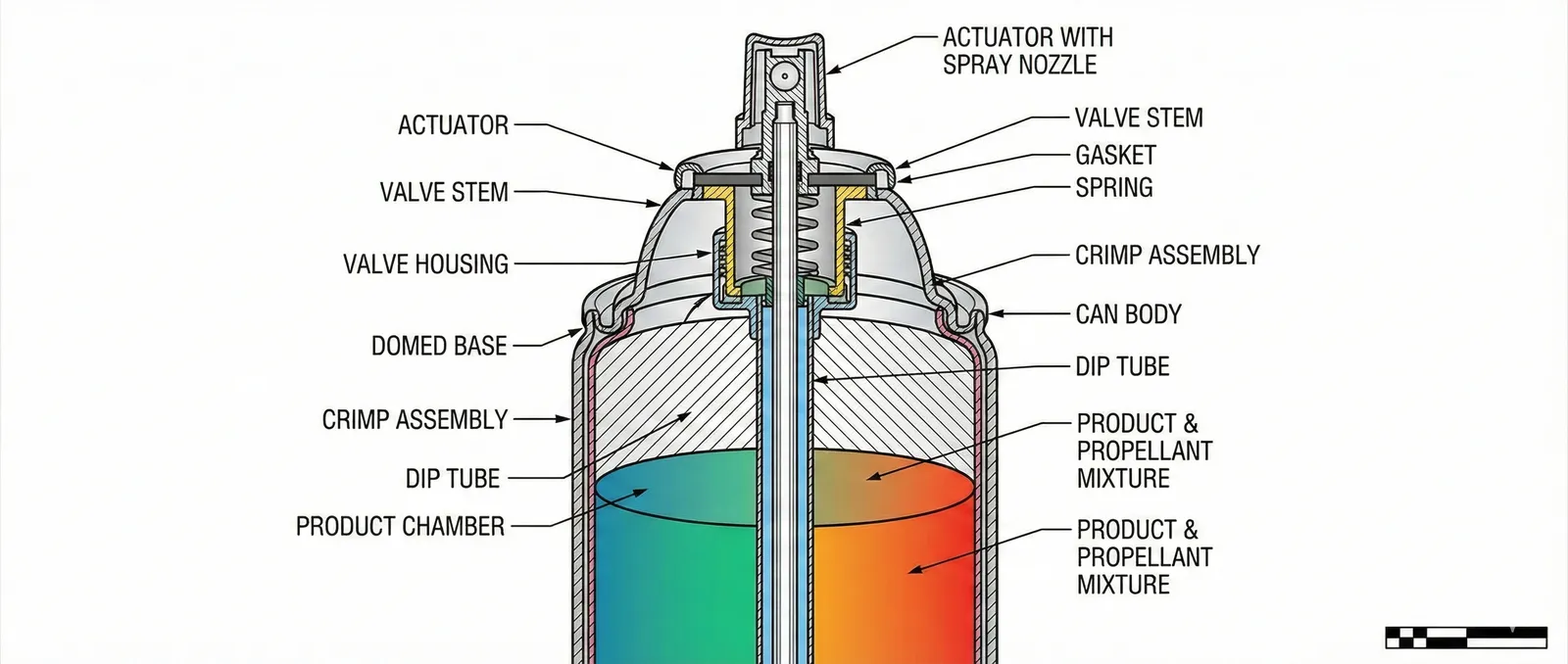
An aerosol system is a pressurized product delivery mechanism in which a formulation is dispensed using a propellant through a valve as a fine spray, foam, stream, or mist.
Core components include:
- Product concentrate (active formulation)
- Propellant (liquefied gas or compressed gas)
- Aerosol valve and actuator
- Pressurized metal container
The interaction between the formulation phase and propellant phase defines the system type.
Solution Aerosol System
Because a solution system depends on the concentrate and propellant being mutually soluble, propellant selection is effectively a solubility decision — the options are compared in our guide to aerosol propellants, and the underlying solvency principles in aerosol chemistry 101.
A solution aerosol system is a single-phase homogeneous system in which the active ingredients and propellant are fully miscible.
The formulation exists as a true solution under pressure and remains uniform throughout shelf life.
Typical Applications
- Air fresheners
- Deodorants
- Perfume sprays
- Brake cleaners
- Penetrating oils
Technical Characteristics
- No particle presence
- No phase separation
- Uniform spray output
- Low valve clogging risk
Advantages
- High physical stability
- Simple manufacturing
- Consistent spray pattern
- Lower rejection rate
Limitations
The limitation is solubility: a solution system only works for ingredients that dissolve fully in the propellant or solvent, which rules out insoluble solids and pigments.
Startup Manufacturing Considerations
- Solubility testing is mandatory
- Propellant–solvent balance is critical
- Vapor pressure must be optimized for spray quality
Emulsion Aerosol System
Emulsion systems are usually water-based, which introduces a corrosion risk to the container that solvent systems do not have. That interaction is examined in our two-part study of corrosion in water-based aerosol cans.
An emulsion aerosol system consists of two immiscible liquid phases stabilized by emulsifiers. The system can be:
Emulsions are classified by which phase is continuous — oil-in-water (O/W) or water-in-oil (W/O) — and that choice determines whether the product dispenses as a foam, a cream, or a spray.
Common Applications
- Shaving foams
- Cosmetic mousses
- Pharmaceutical foam sprays
- Surface disinfectant foams
Key Technical Requirements
- Correct surfactant and HLB selection
- Controlled droplet size distribution
- Shear-stable emulsification process
Advantages
- Enables delivery of water-based and oil-based actives
- Foam generation capability
- Enhanced skin safety for personal care products
Limitations
- Prone to creaming, coalescence, and phase separation
- Sensitive to temperature fluctuations
- Higher formulation complexity
Manufacturing Control Points
- Emulsifier compatibility with propellant
- pH control
- Mixing energy and order of addition
Suspension Aerosol System
Suspended solids are the most common cause of valve and dip-tube blockage, so valve clearances and gasket compatibility matter more here than in a clear solution; see aerosol valve gasket materials.
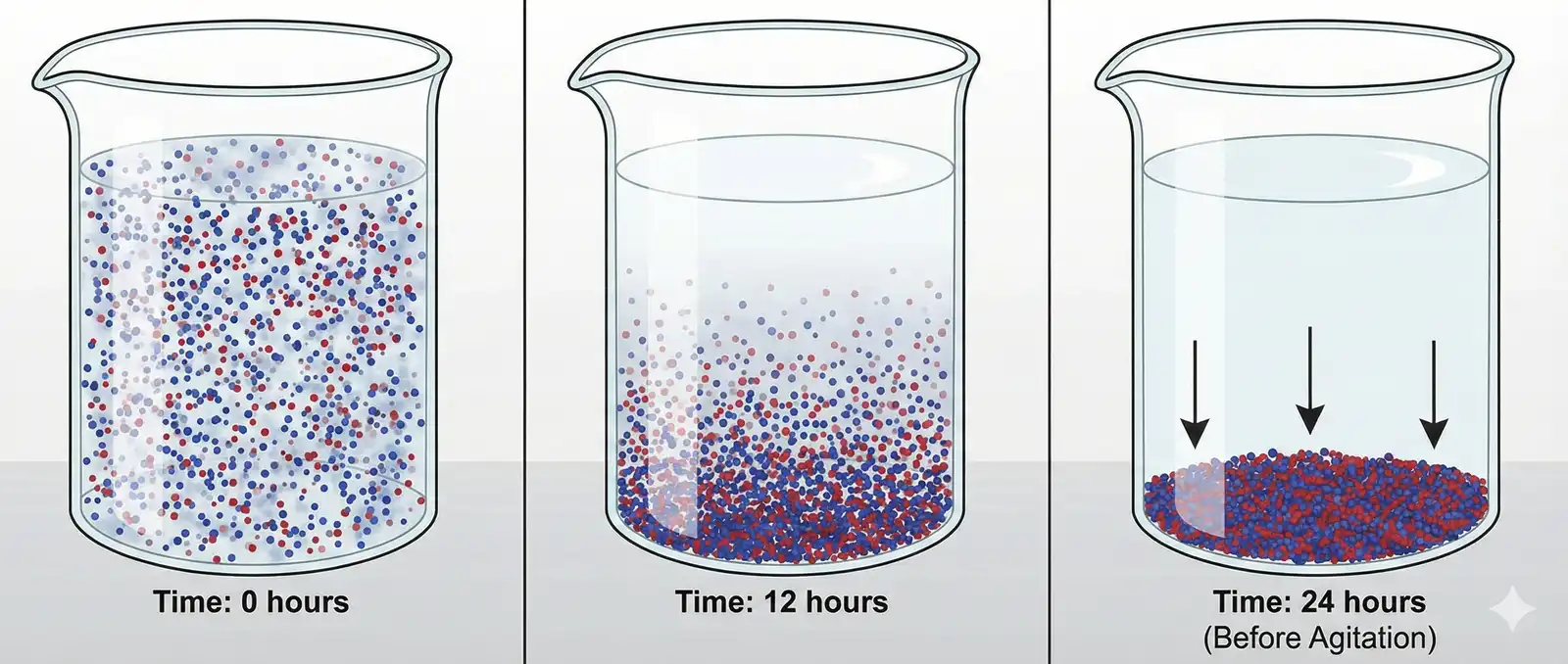
Suspension aerosol systems contain solid particles dispersed in a liquid phase under pressure. These particles do not dissolve and must remain uniformly distributed during storage and use.
Typical applications include:
- Spray paints
- Insecticides
- Antiperspirants
- Industrial coatings
- Lubricant sprays with solids
Key Technical Parameters
- Particle size distribution
- Density difference between solid and liquid
- Rheology and viscosity control
Major Technical Risks
- Sedimentation and hard settling
- Valve blockage
- Nozzle clogging
- Inconsistent spray output
Stability Control Methods
- Use of suspending agents
- Thixotropic structuring
- Proper milling and dispersion
Startup Challenges
- Requires extensive physical stability testing
- High dependency on dispersion quality
- Requires abrasion-resistant valves
Bag-on-Valve (BOV) Aerosol System
Our dedicated guide to bag-on-valve technology covers pouch construction, filling and applications in more detail, and how aerosol cans work explains the pressure behaviour a compressed-gas BOV inherits.
Bag-on-Valve is a mechanically separated aerosol system where the product is sealed inside a collapsible bag, and the propellant remains outside the bag.
The product does not contact the propellant at any stage.
Primary Applications
- Pharmaceutical sprays
- Medical saline sprays
- Food aerosols
- Sterile cosmetic products
Key Technical Features
- 360-degree spray capability
- Compressed air or nitrogen as propellant
- Zero propellant contamination
Advantages
- Highest product purity
- No solvent–propellant interaction
- Improved regulatory acceptance
- Reduced flammability risk
Limitations
- Higher packaging and valve cost
- Specialized filling equipment required
- Lower filling line speed
Comparison: Solution vs Emulsion vs Suspension vs BOV
Phase System
- Solution: Single phase
- Emulsion: Two liquid phases
- Suspension: Solid + liquid
- BOV: Isolated product phase
Stability
- Highest: Solution & BOV
- Moderate: Emulsion
- Most challenging: Suspension
Valve Stress
In service, suspension systems place the highest wear on the valve because of abrasive solids, whereas bag-on-valve carries the lowest contamination risk since the product never contacts the propellant or the can wall.
Cost Structure
- Lowest: Solution
- Medium: Emulsion & Suspension
- Highest: BOV
Regulatory Complexity
- Highest compliance: Pharma BOV systems
- Moderate: Emulsion & Solution
- Technical risk driven: Suspension
Ideal Product Categories
- Automotive: Solution, Suspension
- Cosmetics: Solution, Emulsion, BOV
- Pharma: BOV
- Industrial coatings: Suspension
How to Select the Right Aerosol System for Your Product
System selection must be based on chemistry, market, regulatory requirements, and commercial scale.
Selection criteria include:
- Solubility of active ingredients
- Target spray pattern (mist, foam, stream)
- Product safety classification
- Market and export requirements
- Filling equipment availability
- Cost and scalability
Incorrect system selection leads to:
- Rapid commercial failure
- Field recalls
- Brand damage
- PESO and transport non-compliance
Common Failure Problems in Each Aerosol System
Solution Systems
- Pressure drop over time
- Solvent incompatibility
- Propellant loss
Emulsion Systems
- Phase separation
- Foam collapse
- Temperature-induced instability
Suspension Systems
- Hard settling
- Valve clogging
- Inconsistent spray dose
BOV Systems
- Bag delamination
- Improper crimp seal
- Incomplete evacuation
Commercialization Readiness & Regulatory Overview
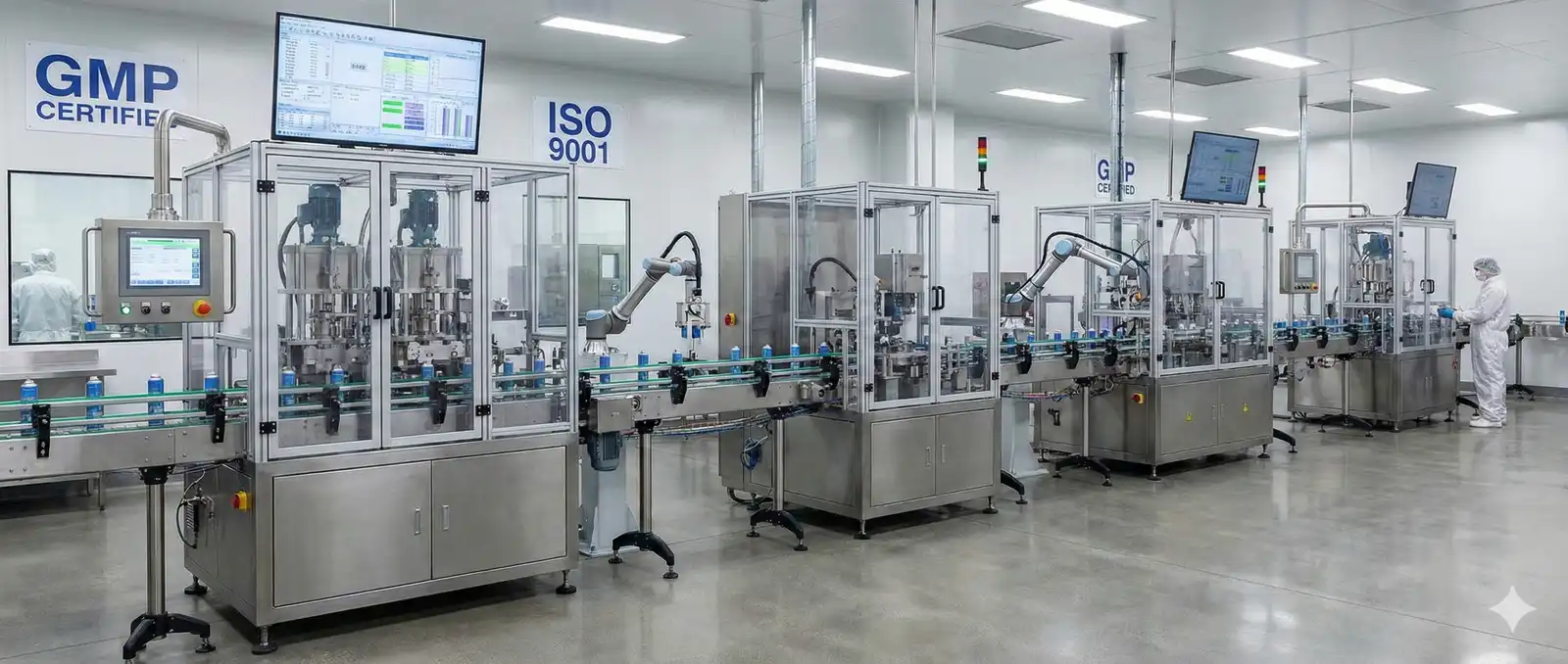
Whichever system is chosen, it must survive the filling line and the leak test before it can ship; those stages are described in our aerosol filling line guide. Aerosols also travel as dangerous goods, and the classification and packaging duties are set out in the UN Model Regulations, with US and EU obligations summarised by the US EPA and enforced in Europe under the Aerosol Dispensers Directive.
In India, aerosol products fall under multiple regulatory frameworks.
Key compliance areas include:
- PESO approval for propellants
- BIS packaging standards
- Legal Metrology labeling
- UN transport regulations
- Export compliance (EU, US, GCC)
Each aerosol system carries different:
- Safety documentation requirements
- Transport classifications
- Storage compatibility rules
How Global Aerosols Supports Aerosol System Selection
Global Aerosols provides end-to-end technical guidance across:
- Aerosol system selection
- Pilot formulation and stability testing
- Valve and propellant compatibility studies
- Contract filling technology audits
- Regulatory and compliance documentation
External Technical References (For Further Reading)
- European Aerosol Federation – Technical Standards
https://www.aerosol.org - US Consumer Product Safety Commission – Aerosol Regulations
https://www.cpsc.gov - British Aerosol Manufacturers’ Association – Industry Guidance
https://www.bama.co.uk
Frequently Asked Questions
What are the main types of aerosol systems?
What is a solution aerosol system?
How does an emulsion aerosol system work?
When is a suspension aerosol system used?
What advantage does bag-on-valve offer?
How do I choose between these aerosol systems?
Need Technical Support for Aerosol Formulations?
Partner with Global Aerosols to audit, scale up, and troubleshoot your aerosol chemistry, canister pressure calculations, filling lines, and safety systems.
Email: consulting@globalaerosols.com
Website: https://www.globalaerosols.com
Phone: +91 9819548320 +91 8169102990
About the Specialist
Absar Khan is the founder and lead aerosol consultant at Global Aerosols. He possesses cross-disciplinary engineering expertise spanning aerosol system design, emulsion and suspension formulation, bag-on-valve technology, and regulatory compliance. Absar leads scientific and engineering advisory teams supporting manufacturers globally in technology selection, GMP layouts, validation frameworks, and regulatory strategies.
LinkedIn Portfolio: Connect with Absar Khan on LinkedIn